Tradition
Korean Buddhism
This tradition works best when temple pages keep mountain setting, monastic life, and ritual continuity visible together.
Quick explainer
How to use this tradition lens
This short explainer tells users what the tradition foregrounds, how it feels on the ground, and when that lens is most useful.
Core concepts
This page teaches the lens, then points to the places.
Korean Buddhism is especially clear through places like Haeinsa and Tongdosa, where UNESCO's mountain-monastery framing and the continuing life of monastic communities make the sacred function inseparable from the architecture.
Bulguksa and Seokguram show a related strength of this tradition: temple terraces, grotto sanctuaries, and highly structured symbolic spaces that still reward a calmer, more ritually literate way of visiting.
Places
Major places connected to Korean Buddhism

Beopjusa Temple
A Korean mountain monastery where large wooden halls, broad courts, and living Buddhist practice still work together as one precinct.

Bongjeongsa Temple
A Korean mountain monastery where wooden halls, quiet courts, and living Buddhist use still hold together as one temple world.
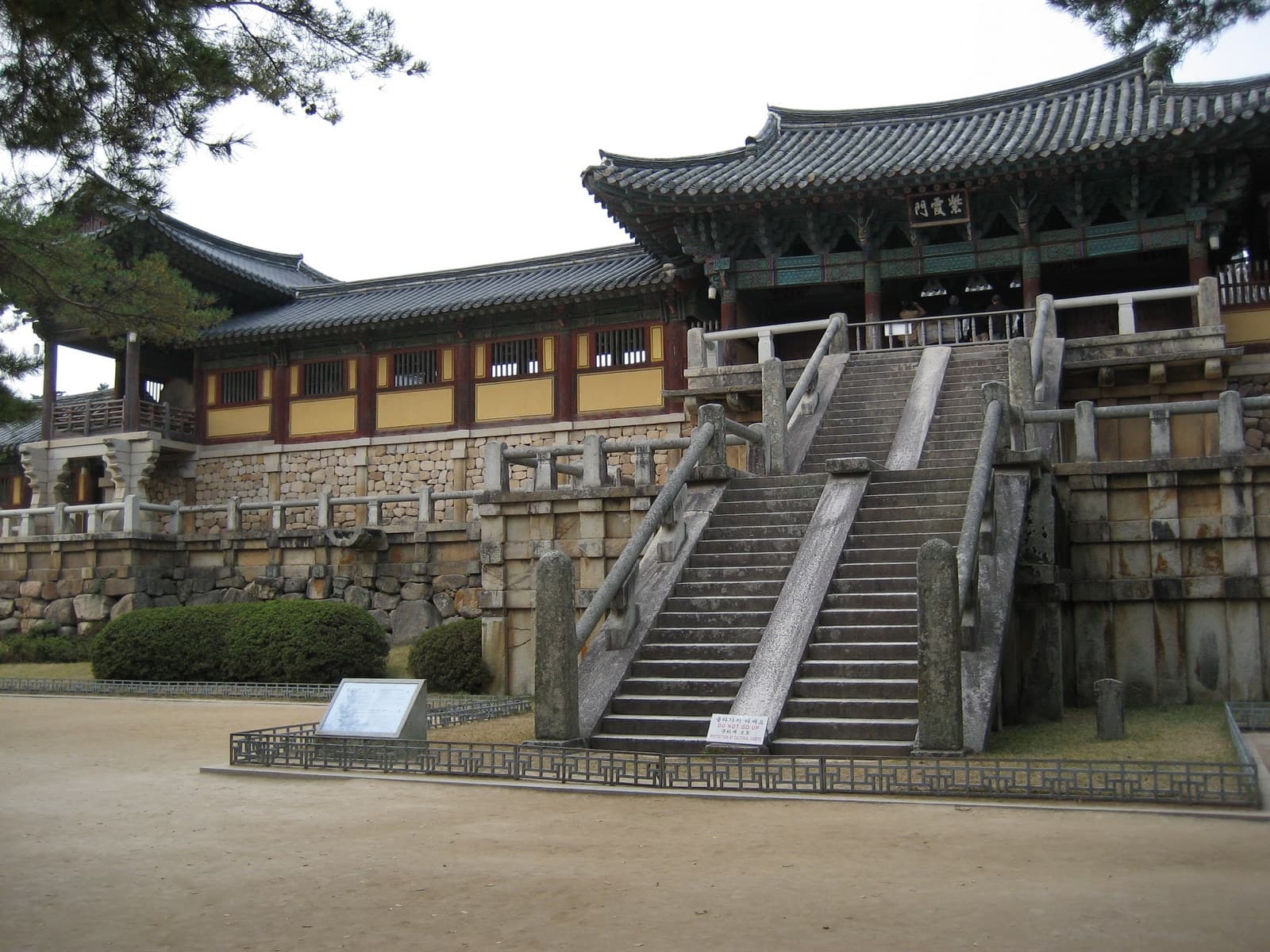
Bulguksa Temple
A Buddhist temple of terraces, bridges, pagodas, and halls arranged to give material form to a Buddhist ideal world.
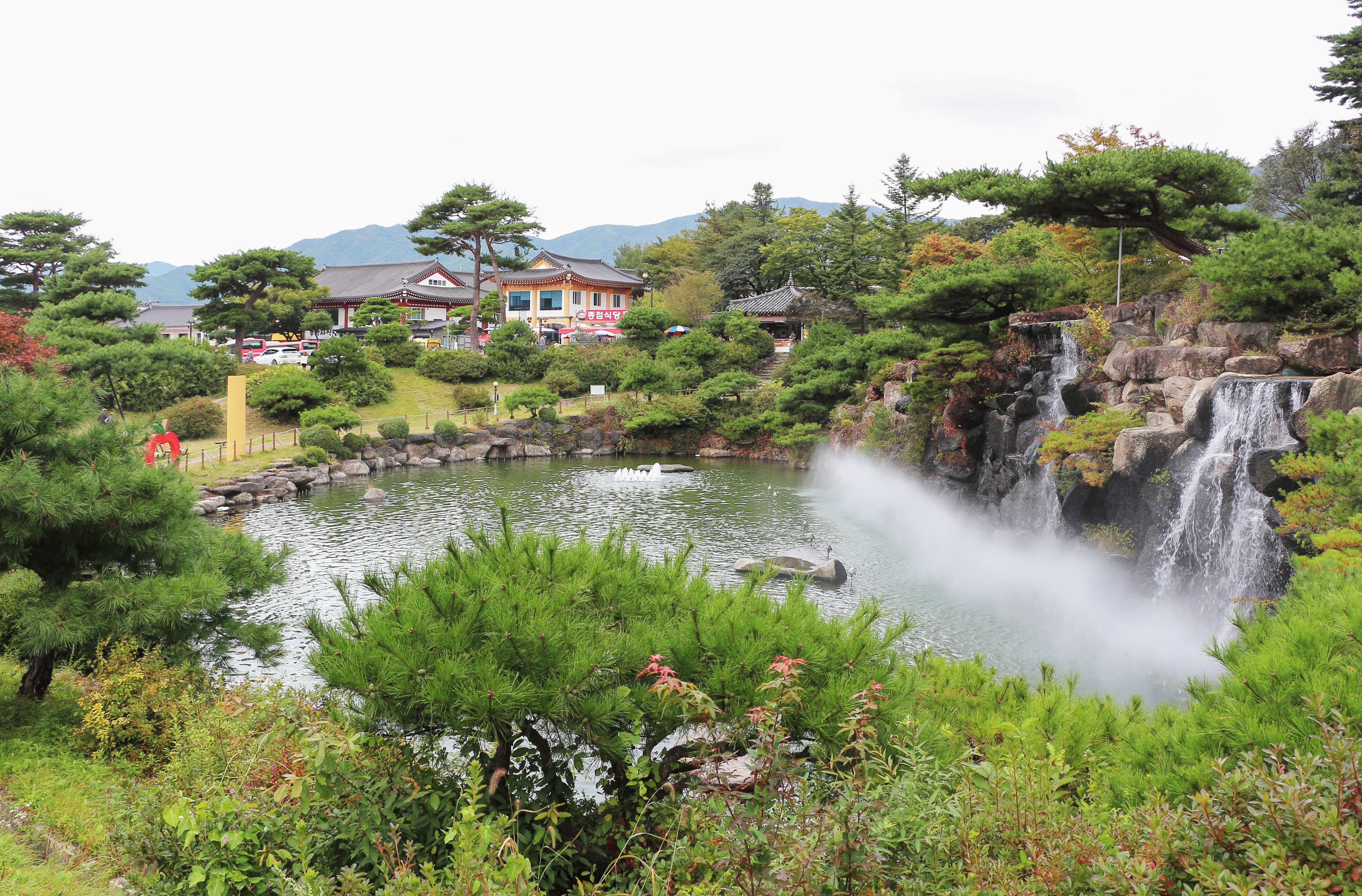
Buseoksa Temple
A Korean mountain monastery where terraces, halls, and long views still shape the approach to an active Buddhist site.

Daeheungsa Temple
A Korean mountain monastery where deep precincts, halls, and a wooded valley setting still support living Buddhist practice.
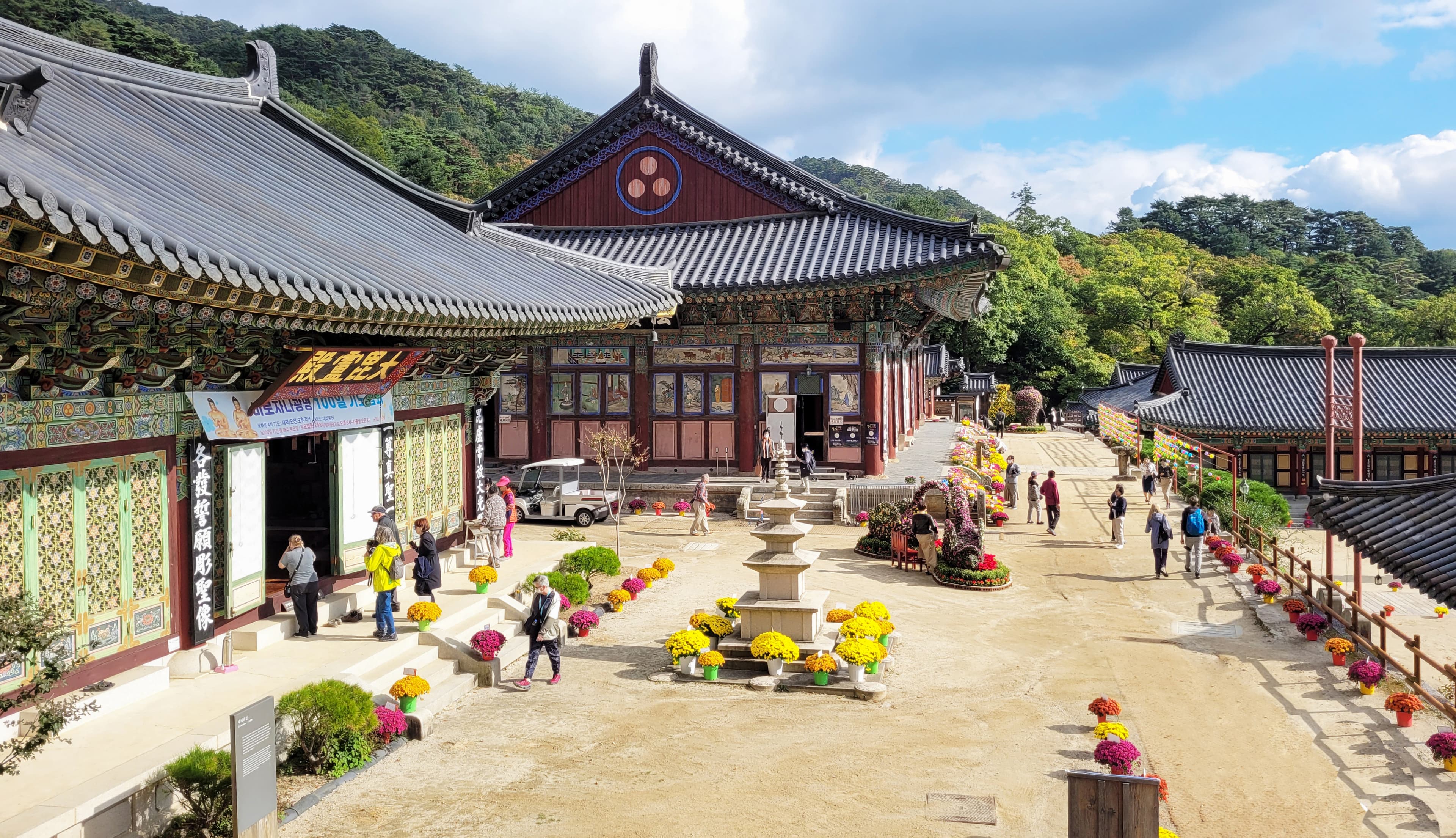
Haeinsa Temple
A mountain temple where living monastic practice and the immense authority of the Tripitaka Koreana still define the sacred atmosphere.
Lesser-known places
Keep the tradition broader than the headline anchors
These pages widen the tradition lens beyond the strongest-known flagship places.

Magoksa Temple
A mountain temple whose halls, courtyards, and wooded setting keep Korean Buddhist monastic space legible at full scale.
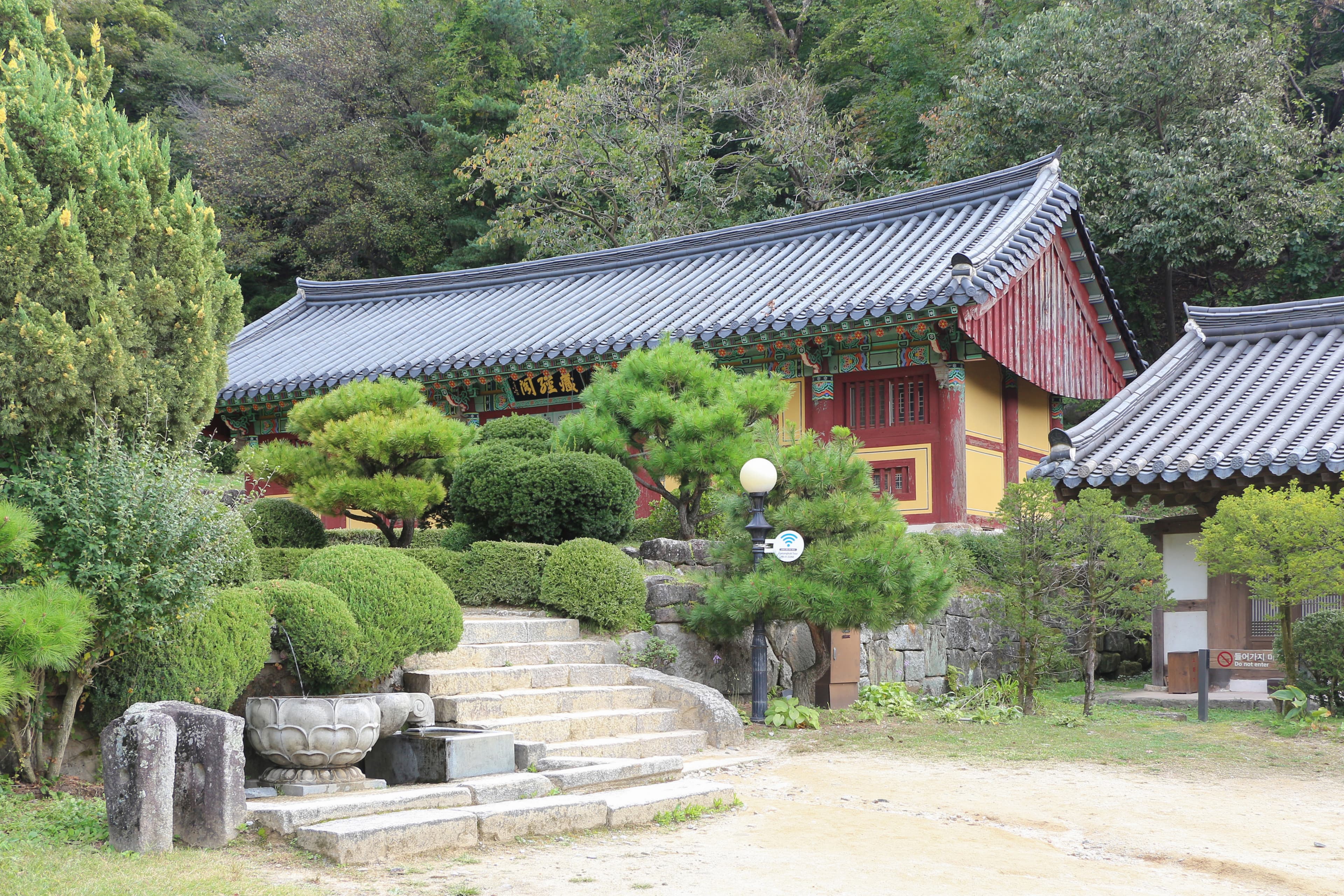
Sansa, Buddhist Mountain Monasteries in Korea
A serial ensemble of living mountain monasteries where seven Korean Buddhist precincts still show one tradition in active form.

Seonamsa Temple
A Korean mountain monastery where halls, gates, and wooded paths still form one living Buddhist environment.
Sacred geographies
Where this tradition clusters most strongly right now
These region links turn the belief lens back into geography when the next step should be spatial rather than purely conceptual.
Patterns
Site-type lanes that recur across this tradition
This gives the tradition page a stronger browse structure than a single flat place list.
Respect and evidence
How this tradition page handles access, myth, and historical framing
Best by constraint
Use the tradition through practical constraints, not just belief labels
These shortcuts are the first pass at long-tail planning questions like mythology, archaeology, season, car-light access, and first-time fit.
FAQ
Questions this tradition hub should answer quickly
Keep exploring
Continue through the regions and place clusters that express this tradition
Links
Reference links and sources
Direct reference links for this entry, with supporting source material below.
- UNESCO entryAuthority source for Haeinsa and scripture-centered Korean Buddhist heritage.
- Wikipedia entryWikipedia article for Korean Buddhism.
- Korean Buddhism (Q593427)Entity anchor for traditions of Buddhism in Korea.
- Haeinsa Temple Janggyeong Panjeon, the Depositories for the Tripitaka Koreana Woodblocks (Property 737)Authority source for Haeinsa and scripture-centered Korean Buddhist heritage.
- Sansa, Buddhist Mountain Monasteries in Korea (Property 1562)Authority source for Korea's living mountain-monastery tradition.
- Seokguram Grotto and Bulguksa Temple (Property 736)Authority source for one of Korea's most significant Buddhist architectural complexes.
- HaeinsaVisual context for Haeinsa and its temple setting on Mount Gaya.
- BulguksaVisual context for Bulguksa's terraces, halls, and ritual layout.
- Korean BuddhismWikipedia article for Korean Buddhism.