Living sacred site
Haeinsa Temple
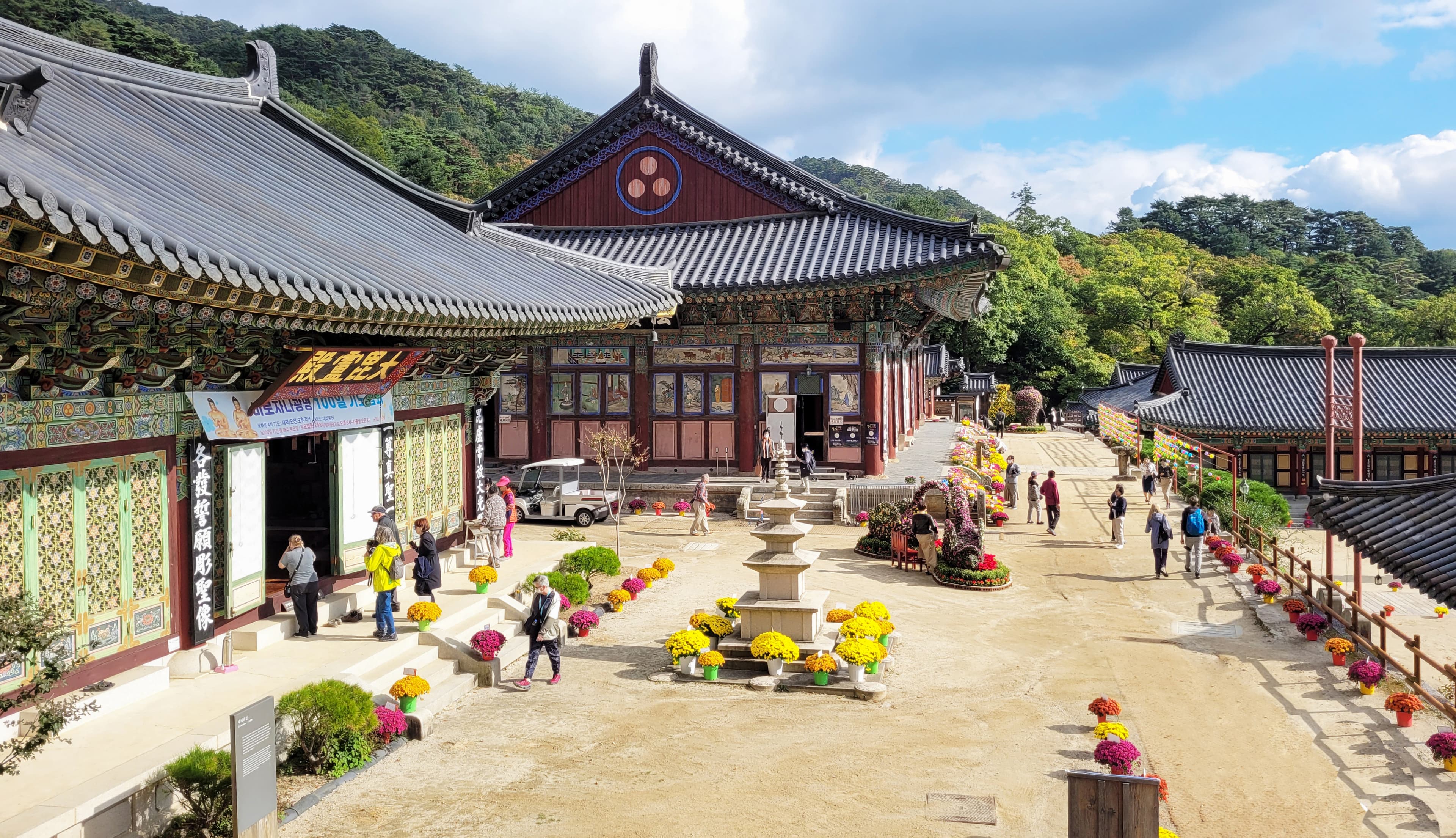
Haeinsa Temple is one of Korea's major living Buddhist monasteries, best understood as a sacred mountain complex where scripture, monastic life, and temple layout remain inseparable.
Visitor essentials
What stands out
Scope note
Keep in view
Keep the living temple context visible here; the famous depositories make fullest sense inside an active Buddhist monastery.
At a glance
Before you visit
A mountain temple where living monastic practice and the immense authority of the Tripitaka Koreana still define the sacred atmosphere
Why it matters
UNESCO states that the Janggyeong Panjeon at Haeinsa Temple is home to the Tripitaka Koreana, the most complete collection of Buddhist texts engraved on more than 80,000 woodblocks, and that these buildings occupy an exceptional position in the history of Buddhism.
That is why Haeinsa matters here: the site is not only a remarkable storage complex, but a living Buddhist temple whose scripture culture, mountain setting, and monastic continuity still belong together.
Respect notes
Visiting notes
Story and context
History and sacred context
UNESCO is especially useful here because it makes clear that the Janggyeong Panjeon are the most important buildings within the wider Haeinsa Temple complex and still preserve their original function.
Korea Heritage Service's live World Heritage page is strong enough to anchor Haeinsa directly because the official heritage authority explicitly treats Haeinsa Temple as the mountain monastery that houses the Tripitaka Koreana and explains its continuing Buddhist identity as the Temple of Dharma.
Sources
- Official websitePrimary visitor-facing site for current access and institutional context.
- UNESCO entryPrimary authority source for Haeinsa's scripture depositories and Buddhist significance.
- Wikipedia entryWikipedia article for Haeinsa.
- Haeinsa (Q489795)Entity anchor for Haeinsa as a Buddhist temple on Mount Gaya.
- Haeinsa Temple Janggyeong Panjeon, the Depositories for the Tripitaka Koreana Woodblocks (Property 737)Primary authority source for Haeinsa's scripture depositories and Buddhist significance.
- HaeinsaVisual context for the temple precinct, mountain setting, and Tripitaka-related spaces.
- Haeinsa Temple Janggyeong Panjeon, the Depositories of the Tripitaka Koreana WoodblocksOfficial Korean heritage authority World Heritage page that directly describes Haeinsa Temple as the living mountain monastery housing the Tripitaka Koreana and the Janggyeong Panjeon depositories.
- HaeinsaWikipedia article for Haeinsa.
Nearby places
Nearby sacred places in Korea

Beopjusa Temple
A Korean mountain monastery where large wooden halls, courtyards, and living Buddhist practice still work together as one precinct.

Bongjeongsa Temple
A Korean mountain monastery where wooden halls, quiet courts, and living Buddhist use still hold together as one temple world.
Buseoksa Temple
A Korean mountain monastery where terraces, halls, and expansive setting still support a living Buddhist atmosphere.

Daeheungsa Temple
A Korean mountain monastery where deep precincts, halls, and a wooded valley setting still support living Buddhist practice.
Keep exploring