Living sacred site
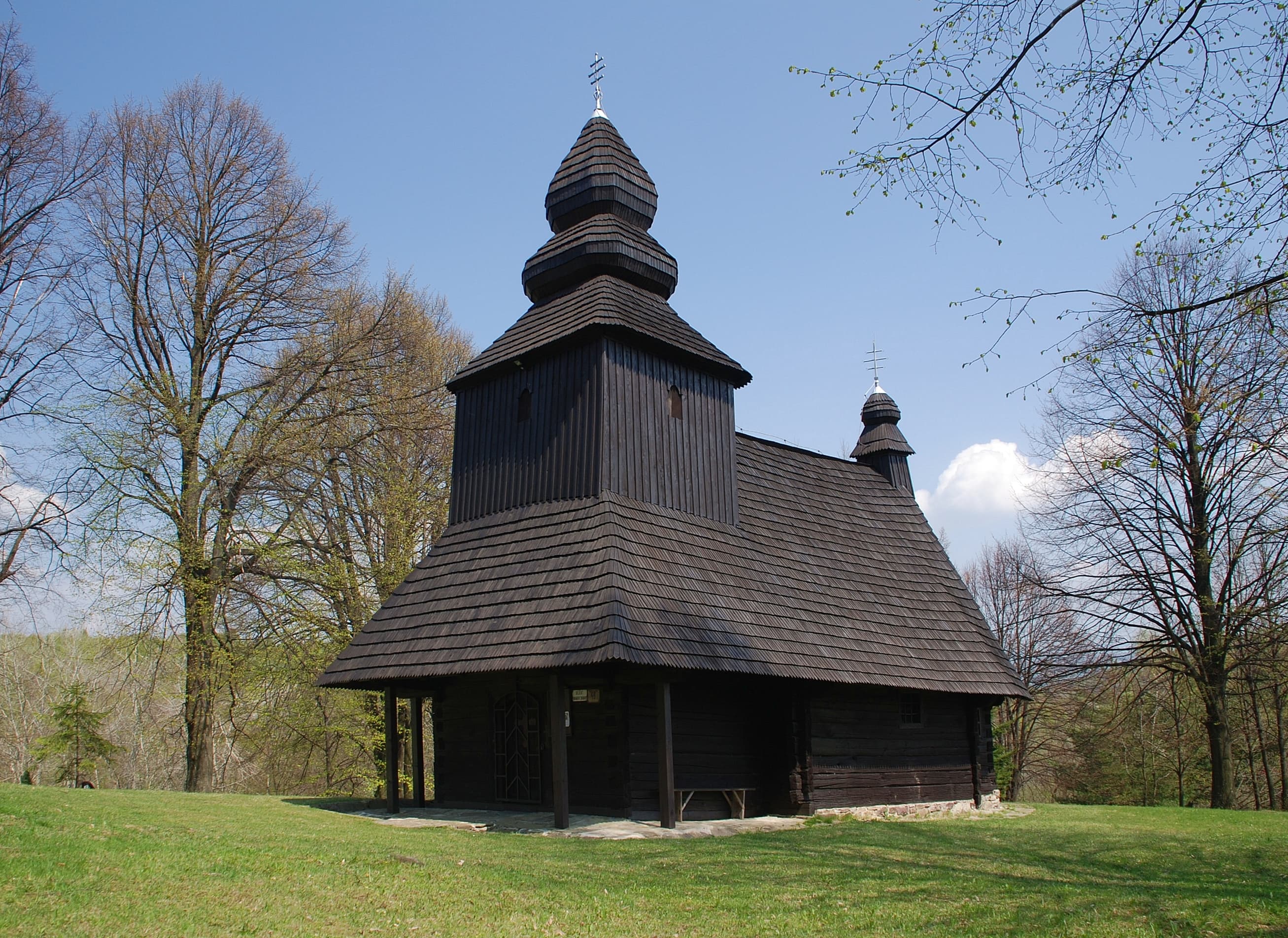
Church of the Transfer of the Relics of St. Nicholas, Ruská Bystrá
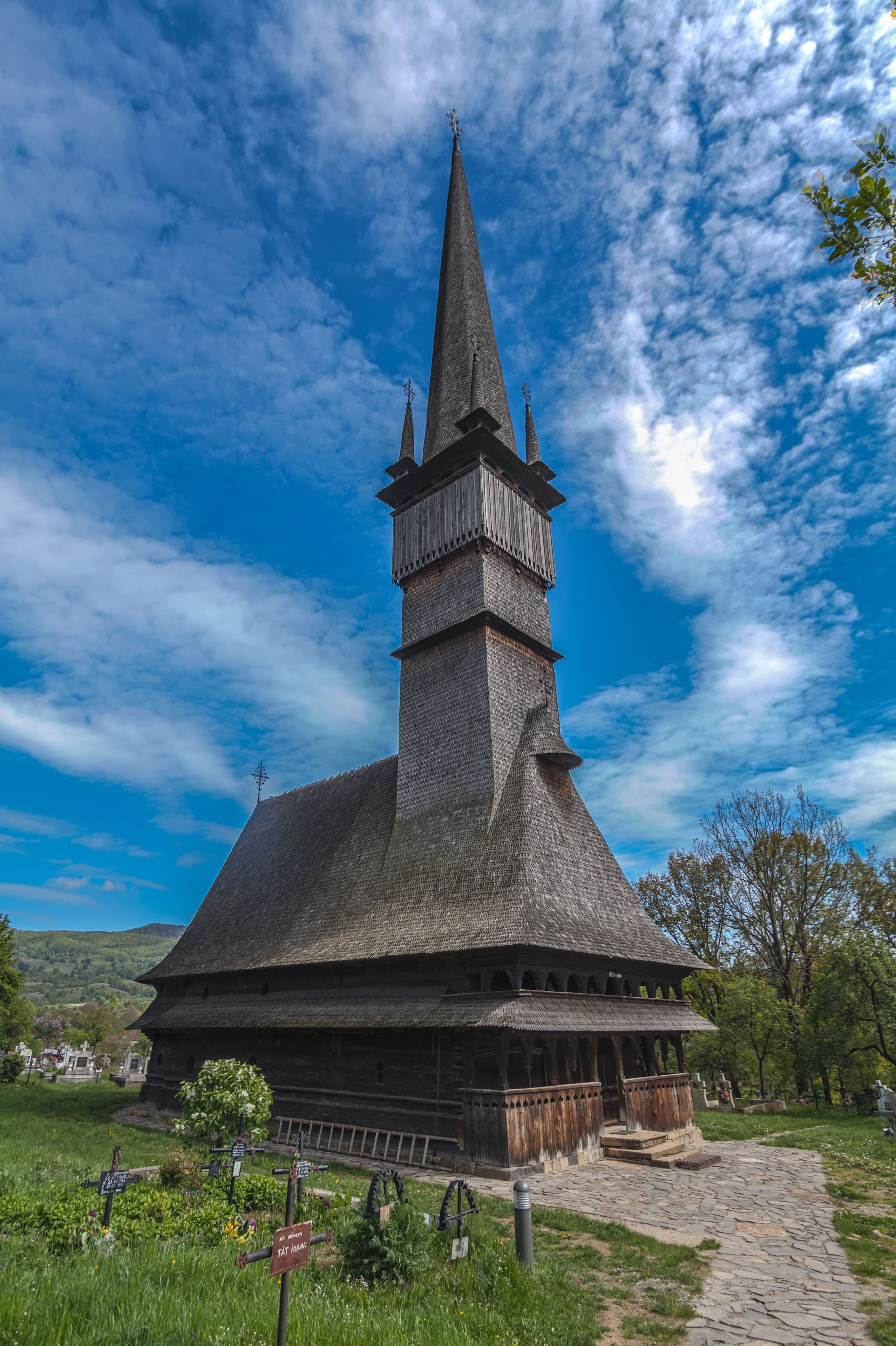
Ruská Bystrá matters because UNESCO includes it among the eastern-rite churches that give the Slovak Carpathian series its sacred depth, while Commons and the linked authority data keep the exact church identified as a Greek Catholic building with its own local devotional setting.
Visitor essentials
What stands out
Scope note
Keep in view
Keep the church's remoteness visible without turning it into a fantasy of isolation; it is still a sacred village place.
At a glance
Before you visit
A Greek Catholic wooden church whose layered roofline and remote Carpathian setting still feel like an active eastern-rite sanctuary rather than a preserved shell
Why it matters
UNESCO presents the Slovak Carpathian churches as a sacred meeting ground of Latin and Byzantine traditions, and Ruská Bystrá is one of the eastern-rite churches in the official component list.
That matters here because the Commons category and authority data identify the exact church as a Greek Catholic wooden church with a distinct dedication and component number, keeping the page grounded in a real confessional setting.
Respect notes
Visiting notes
Story and context
History and sacred context
Sources
- Official websitePrimary visitor-facing site for current access and institutional context.
- UNESCO entryPrimary authority source for the Slovak Carpathian wooden church serial property.
- Wikipedia entryWikipedia article for Church of the Transfer of the Relics of St. Nicholas (Ruská Bystrá).
- Wooden Churches of the Slovak part of the Carpathian Mountain Area (Property 1273)Primary authority source for the Slovak Carpathian wooden church serial property.
- Wooden Churches of the Slovak part of the Carpathian Mountain Area - MapsOfficial component table for the inscribed churches, including Ruská Bystrá as 1273-009.
- Church of the Transfer of the Relics of St. Nicholas (Ruská Bystrá) (Q82361)Entity anchor identified via the Commons authority panel for the Ruská Bystrá church as a Greek Catholic UNESCO component.
- Category:Temple of Translation of St Nicholas's Relics, Ruská BystráVisual and authority context for the Ruská Bystrá church as a Greek Catholic UNESCO component with World Heritage Site ID 1273-009.
- Church of the Transfer of the Relics of St. Nicholas (Ruská Bystrá)Wikipedia article for Church of the Transfer of the Relics of St. Nicholas (Ruská Bystrá).
- Farnosť Ruský HrabovecOfficial Košice Greek Catholic eparchy parish page listing Ruská Bystrá as an active filial church with regular liturgy there.
Nearby places
Nearby sacred places in Central Europe
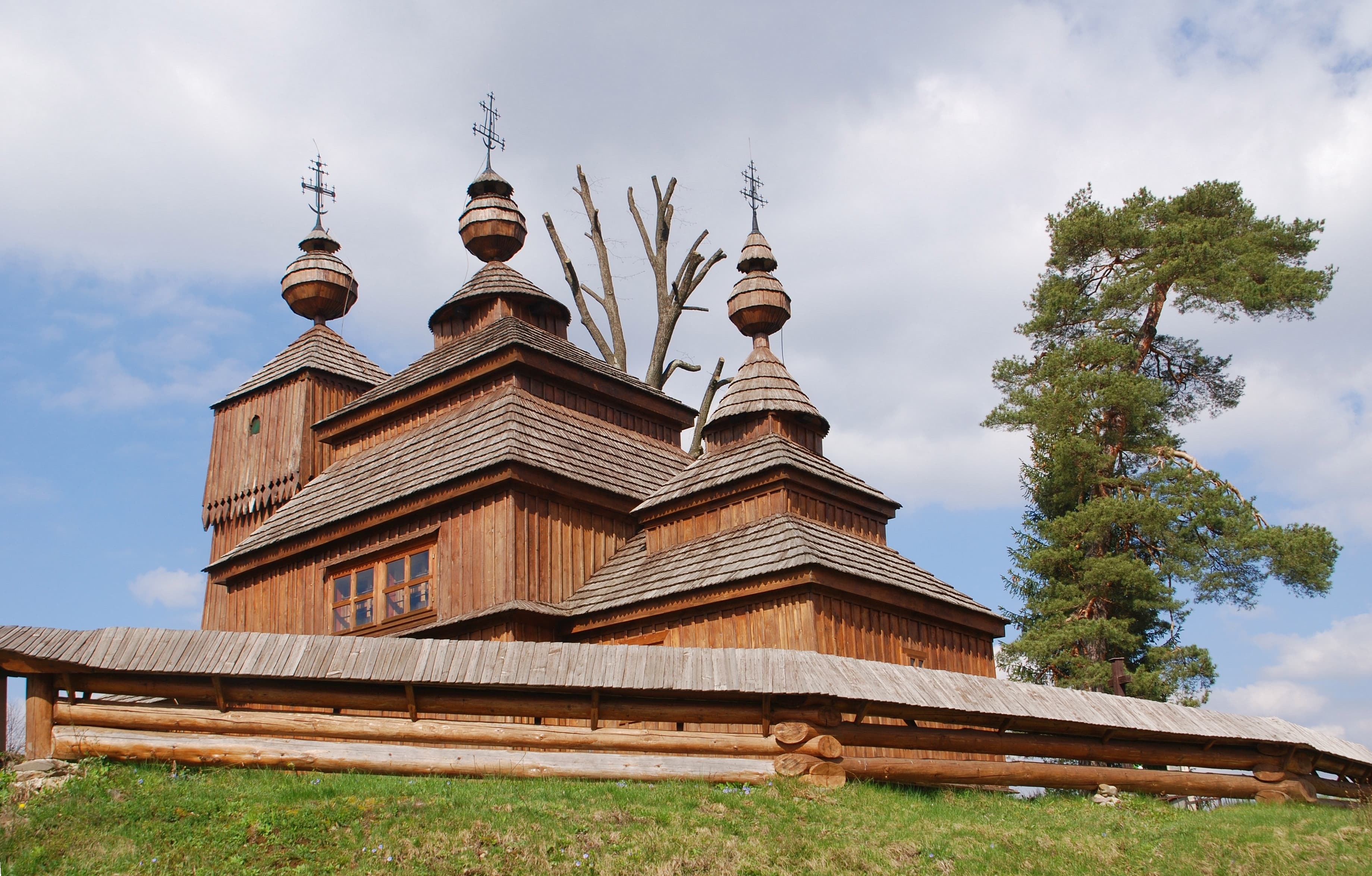
Church of Saint Nicolas, Bodružal
A Greek Catholic wooden church whose vertical roof composition and icon-filled interior still hold village worship and Carpathian sacred form together.
.jpg&w=3840&q=75)
Church of All Saints, Blizne
A fortified-feeling village church whose timber body and Catholic continuity still give the Blizne landscape a strongly devotional center of gravity.
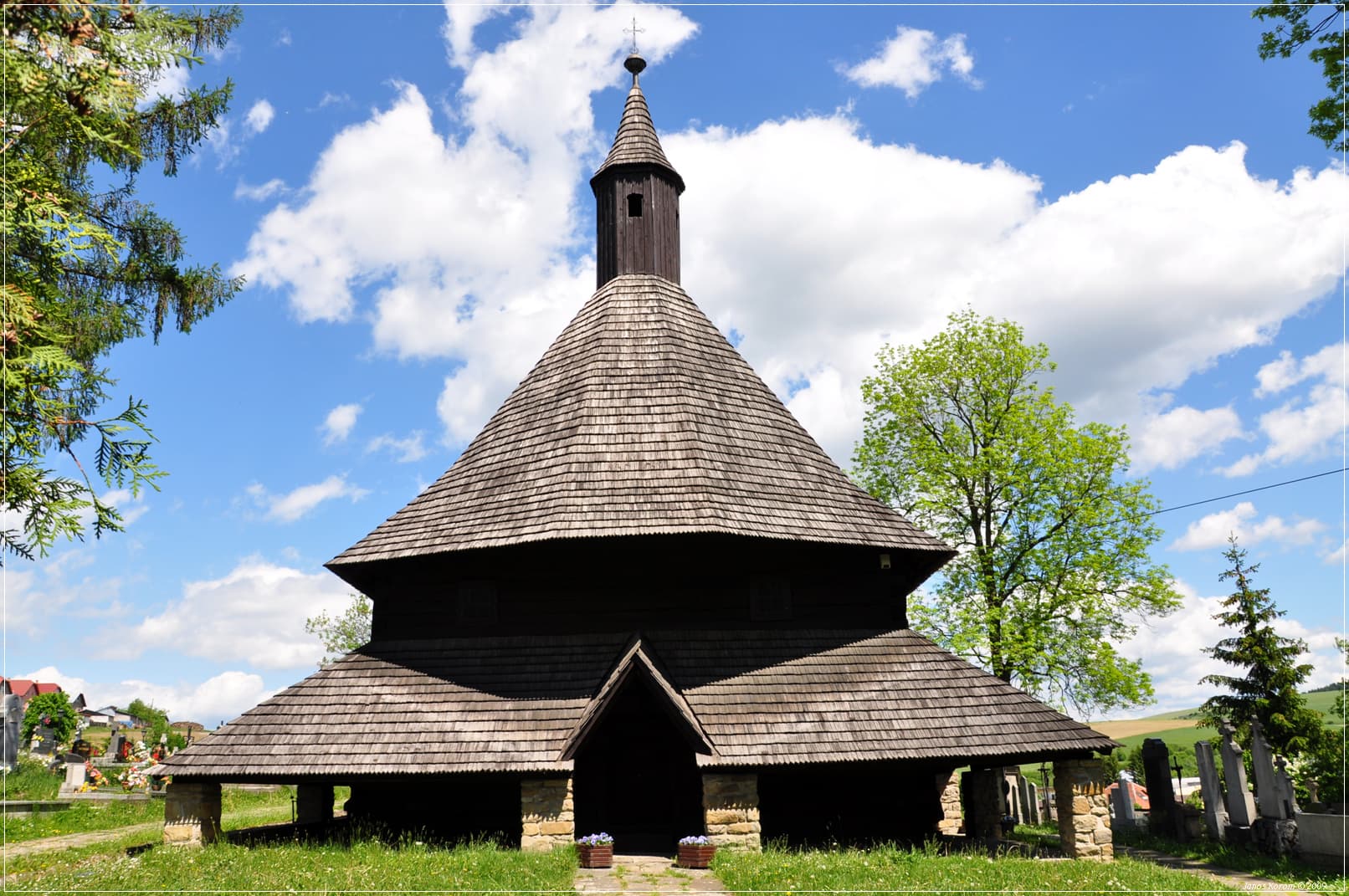
Church of All Saints, Tvrdošín
A late-Gothic wooden church whose Roman Catholic continuity is still carried by timber walls, village scale, and a calm hillside presence.
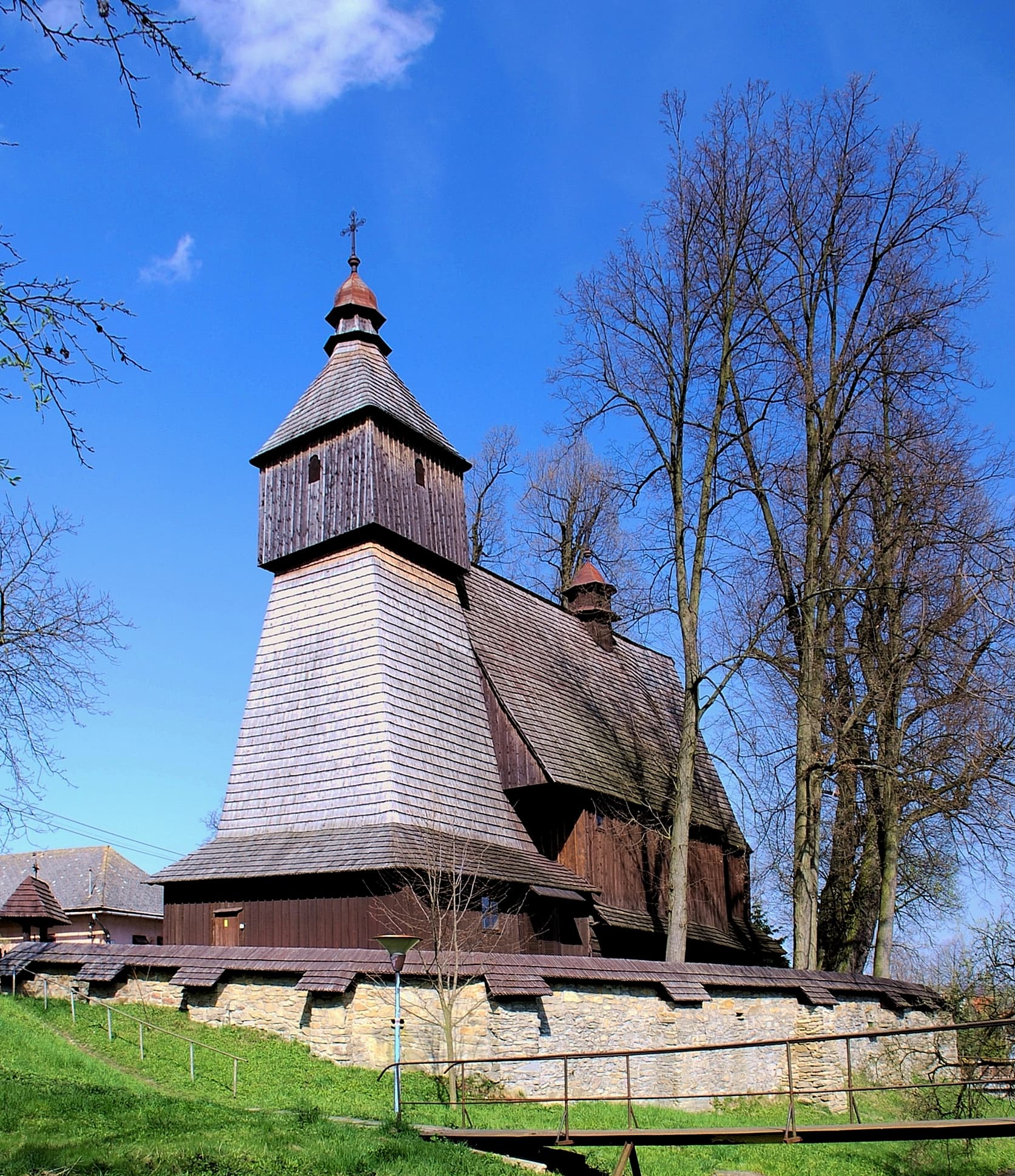
Church of Saint-Francis of Assisi, Hervartov
A late-medieval Roman Catholic wooden church whose modest village setting still carries the weight of centuries of worship and painted devotion.
Same tradition elsewhere
Greek Catholic Christianity sacred sites beyond Central Europe
Keep exploring