Region
Central Europe
A region of wooden churches, monastery landscapes, Lutheran meeting houses, and borderland sacred traditions where Catholic, Protestant, and Eastern Christian histories often stay close to their village settings.
Quick explainer
How to use this regional lens
This short explainer tells users what makes the region distinct, who it suits, and how to move through it.
Regional character
A sacred geography with its own travel rhythm
Central Europe is especially strong for sacred travel when the region is read through local continuity rather than capital-city monumentality. Wikidata treats Central Europe as a real regional frame that includes Poland, and UNESCO's Southern Lesser Poland churches and Peace Churches show how village worship, timber construction, and confessional memory can still hold together in one landscape.
That makes the region rewarding for slower routes. Places like Binarowa, Lipnica Murowana, Jawor, and Świdnica are not strongest as isolated postcard stops; they work as part of a broader sacred geography of timber churches, graveyards, parish life, tolerated Protestant worship, and mountain-edge settlements.
Featured places
Sacred places in Central Europe
.jpg&w=3840&q=75)
Church of All Saints, Blizne
A fortified-feeling village church whose timber body and Catholic continuity still give the Blizne landscape a strongly devotional center of gravity.
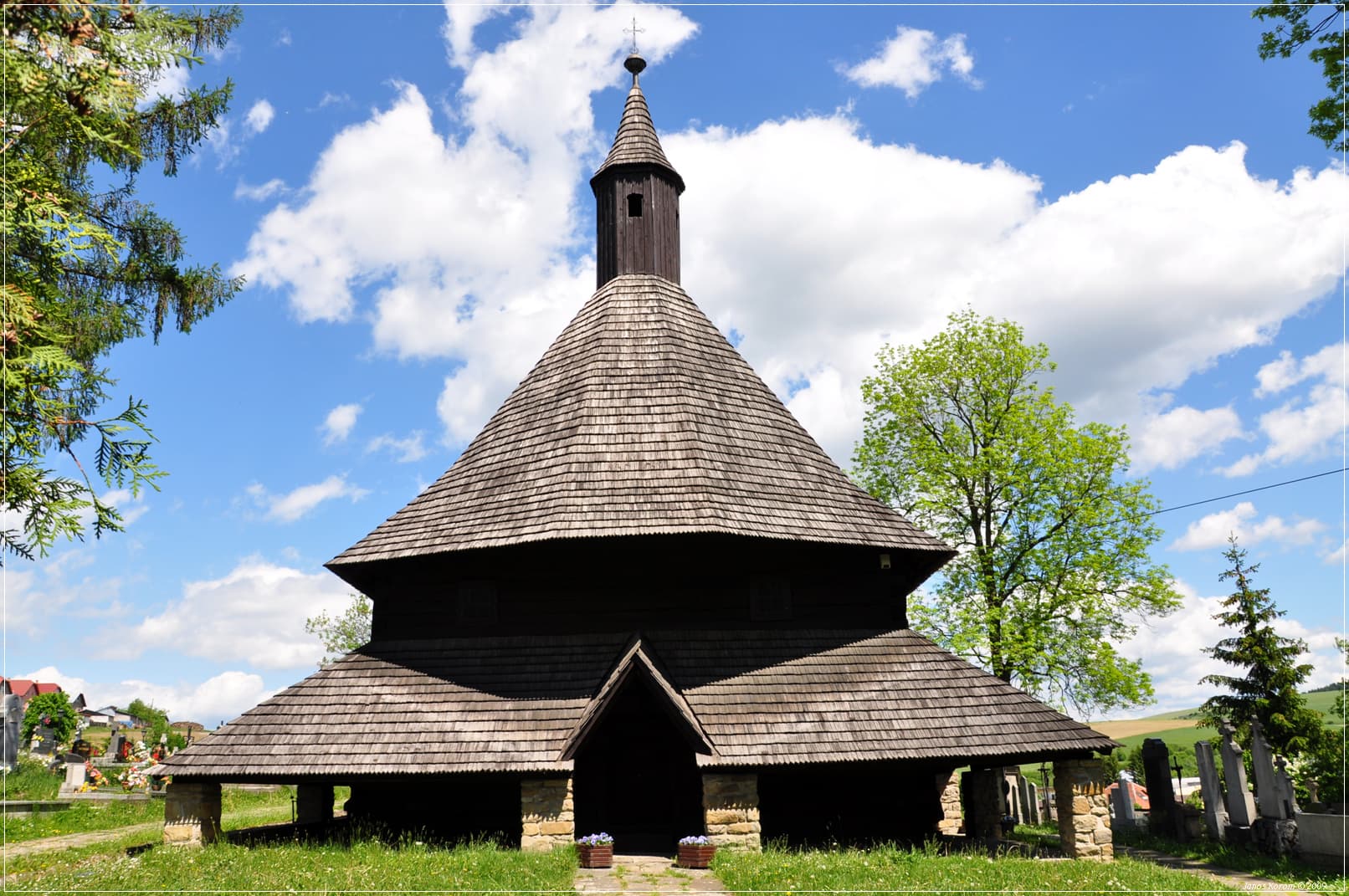
Church of All Saints, Tvrdošín
A late-Gothic wooden church whose Roman Catholic continuity is still carried by timber walls, village scale, and a calm hillside presence.

Church of Our Lady's Protection, Owczary
A seventeenth-century tserkva where eastern Christian form and later Catholic parish life still remain visibly entangled.
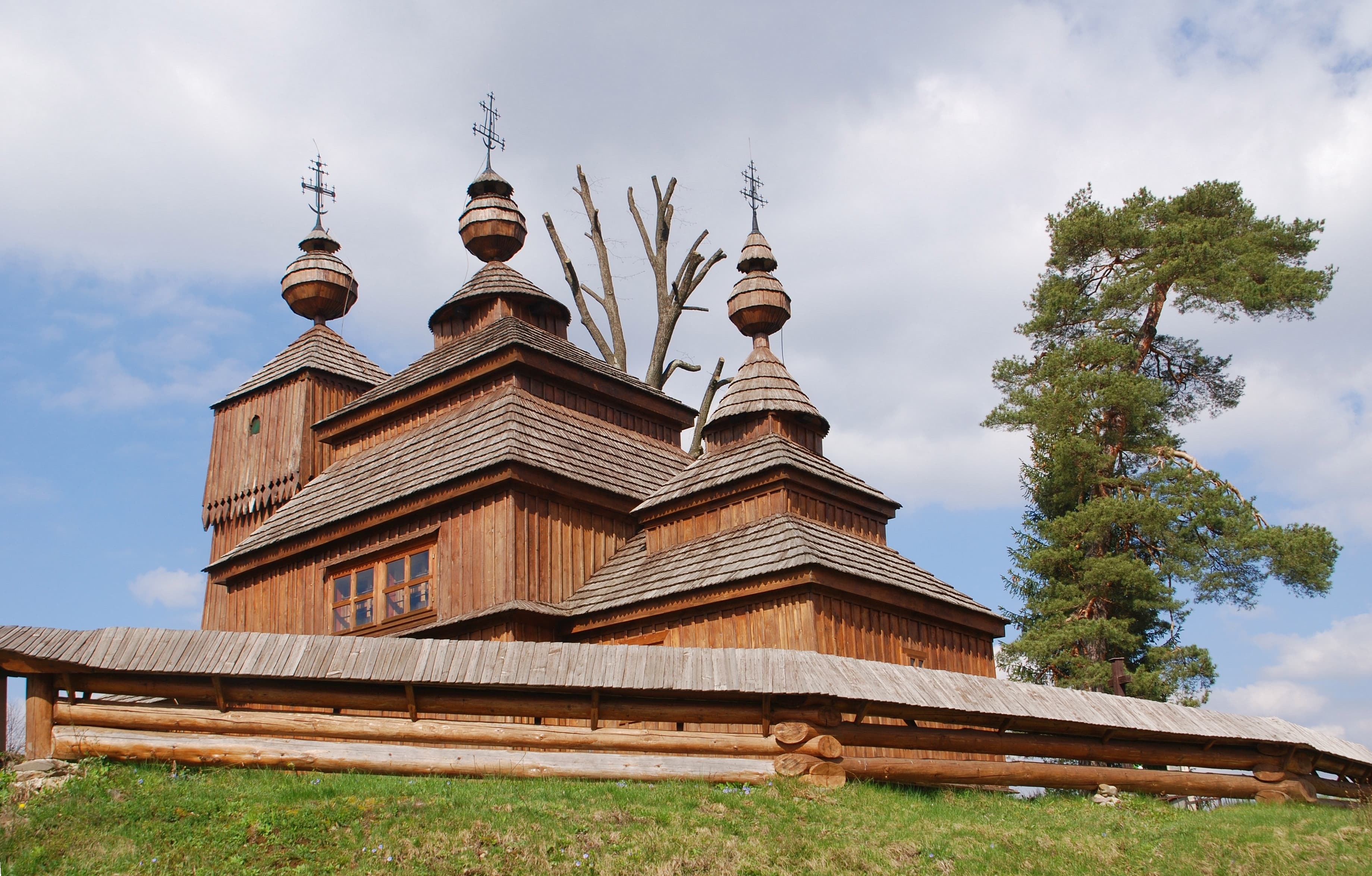
Church of Saint Nicolas, Bodružal
A Greek Catholic wooden church whose vertical roof composition and icon-filled interior still hold village worship and Carpathian sacred form together.
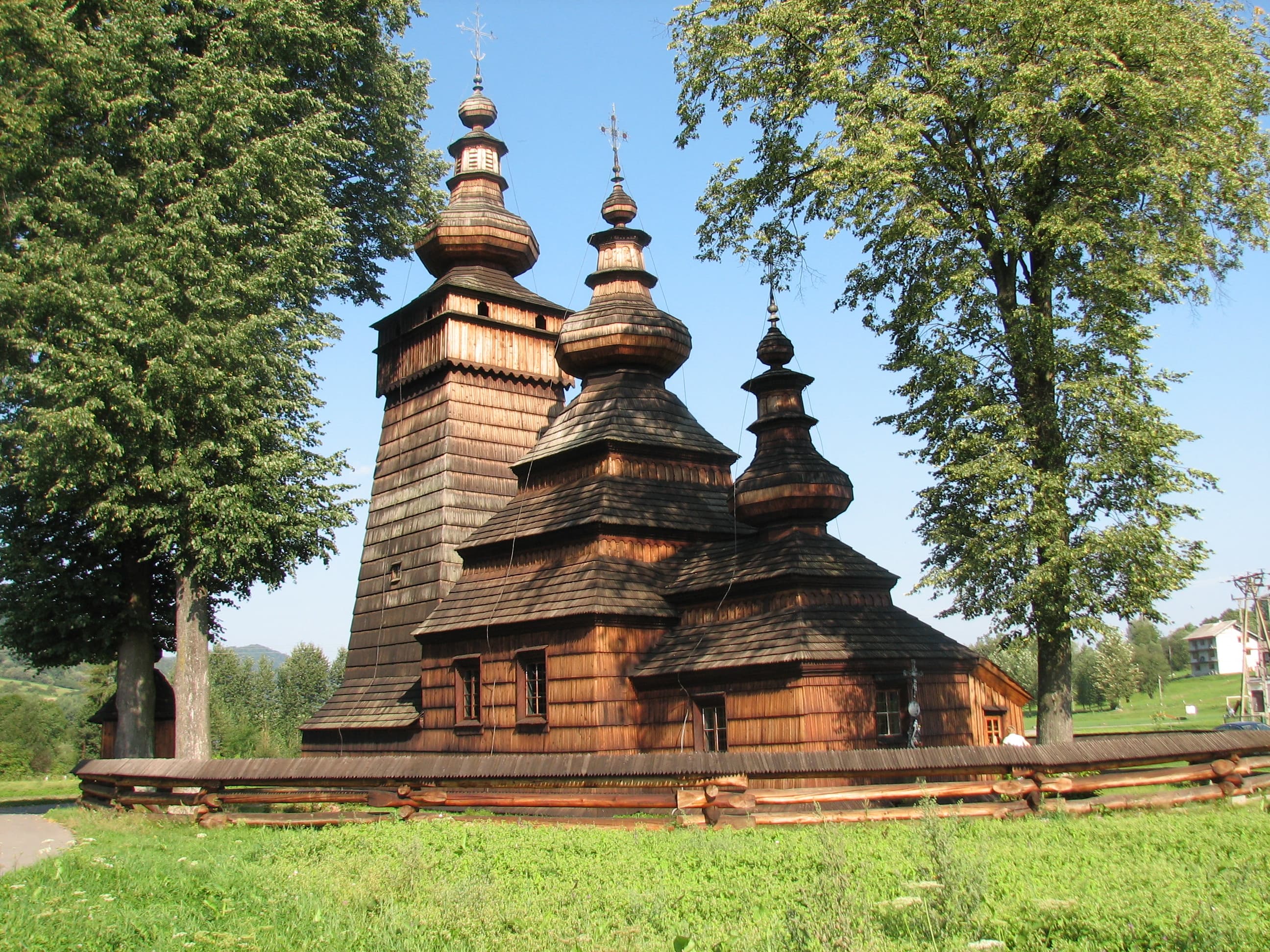
Church of Saint Paraskeva, Kwiatoń
A Lemko tserkva whose eastern Christian form still shapes the sacred atmosphere even after later Catholic realignment.
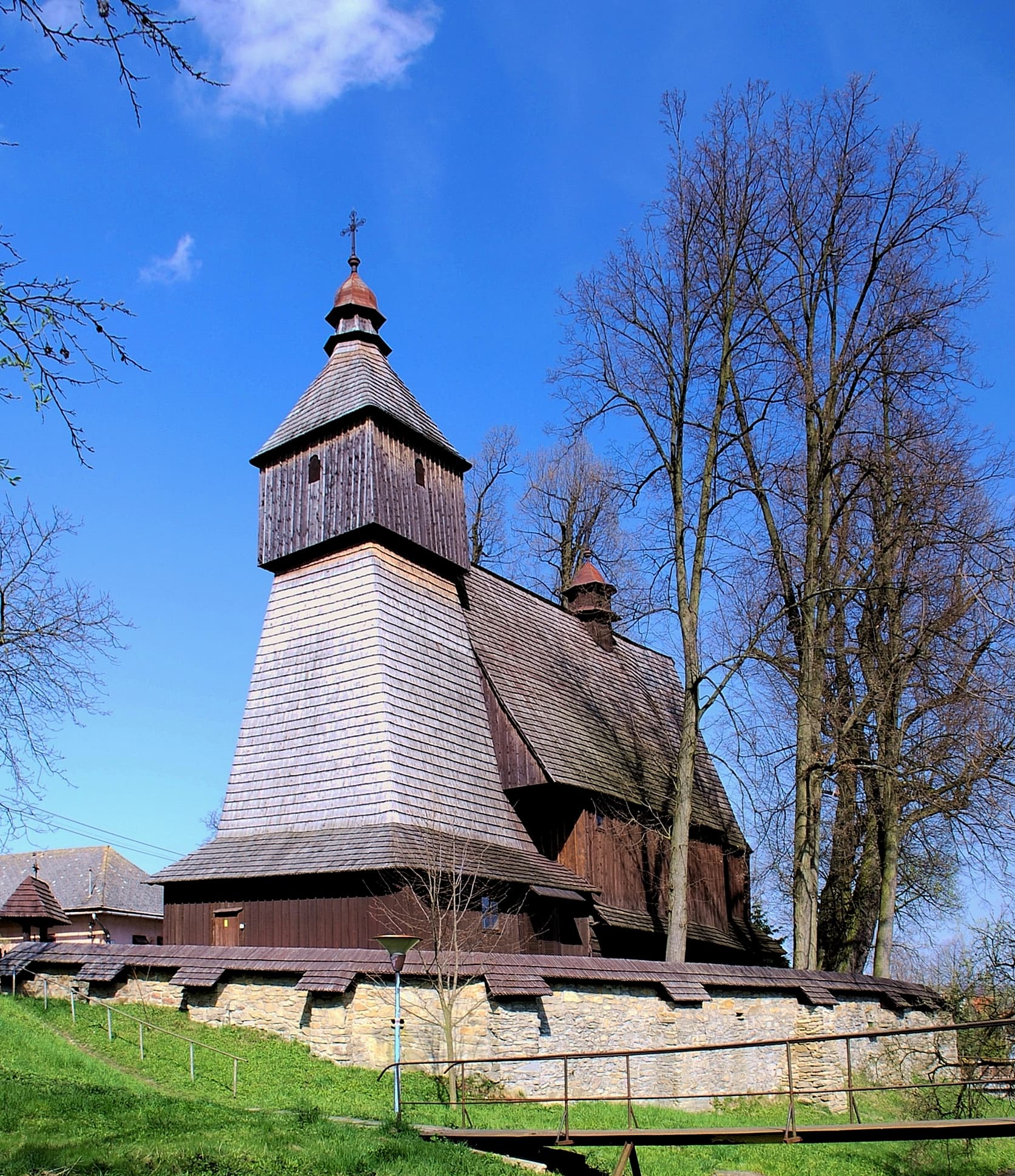
Church of Saint-Francis of Assisi, Hervartov
A late-medieval Roman Catholic wooden church whose modest village setting still carries the weight of centuries of worship and painted devotion.
Lesser-known places
Keep the region broader than the headline anchors
These pages widen the regional field beyond the most obvious route stops.
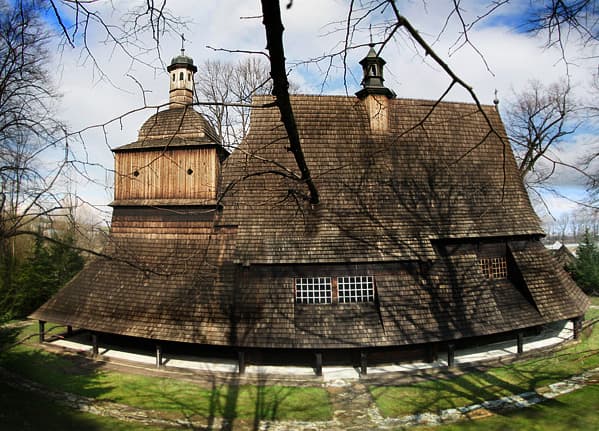
Church of St. Philip and St. James the Apostles, Sękowa
A roof-heavy wooden church whose long protective arcades still make Sękowa feel like a devotional shelter before it feels like a historic stop.

Church of the Archangel Michael, Binarowa
A timber church in southern Poland where medieval Catholic continuity still feels inseparable from the village, the fence line, and the shingled roofscape.
.jpg&w=3840&q=75)
Church of the Archangel Michael, Dębno
A mountain-edge wooden church whose spare Gothic form and Catholic continuity still make Dębno feel like a place of devotion before it feels like a monument.
Planning signals
Seasonality, access, and site-type patterns
These quick signals make the regional planning shape explicit without forcing a full itinerary yet.
Best by constraint
Use the region through practical constraints, not just one flat place list
These shortcuts are the first pass at long-tail planning questions like mythology, archaeology, season, car-light access, and first-time fit.
FAQ
Questions this regional hub should answer quickly
Keep exploring
Continue through the strongest relationships inside this region
Links
Reference links and sources
Direct reference links for this entry, with supporting source material below.
- UNESCO entryPrimary authority source for the inscribed wooden churches of Southern Lesser Poland as a medieval Roman Catholic sacred-building tradition.
- Wikipedia entryWikipedia article for Central Europe.
- Central Europe (Q27509)Entity anchor for Central Europe as a region that includes Poland and its surrounding sacred geographies.
- Wooden Churches of Southern Małopolska (Property 1053)Primary authority source for the inscribed wooden churches of Southern Lesser Poland as a medieval Roman Catholic sacred-building tradition.
- Wooden Churches of Southern Małopolska - MapsOfficial component table and site maps for the six inscribed churches.
- Category:Saint Michael Archangel church in BinarowaVisual context for one of the region's representative wooden churches, including its enclosure and parish setting.
- Category:Church of St. Leonard in Lipnica MurowanaVisual context for the cemetery church at Lipnica Murowana and its surrounding sacred landscape.
- Churches of Peace in Jawor and Świdnica (Property 1054)Authority source for the Lutheran Peace Churches in Poland as testimony to tolerated Protestant sacred architecture.
- Churches of Peace in Jawor and Świdnica - MapsOfficial component table for the two inscribed Peace Churches in Jawor and Świdnica.
- Wooden Churches of the Slovak part of the Carpathian Mountain Area (Property 1273)Authority source for the Slovak Carpathian Lutheran, Catholic, and Greek Catholic wooden churches.
- Central EuropeWikipedia article for Central Europe.