Living sacred site
Church of Saint Paraskeva, Kwiatoń
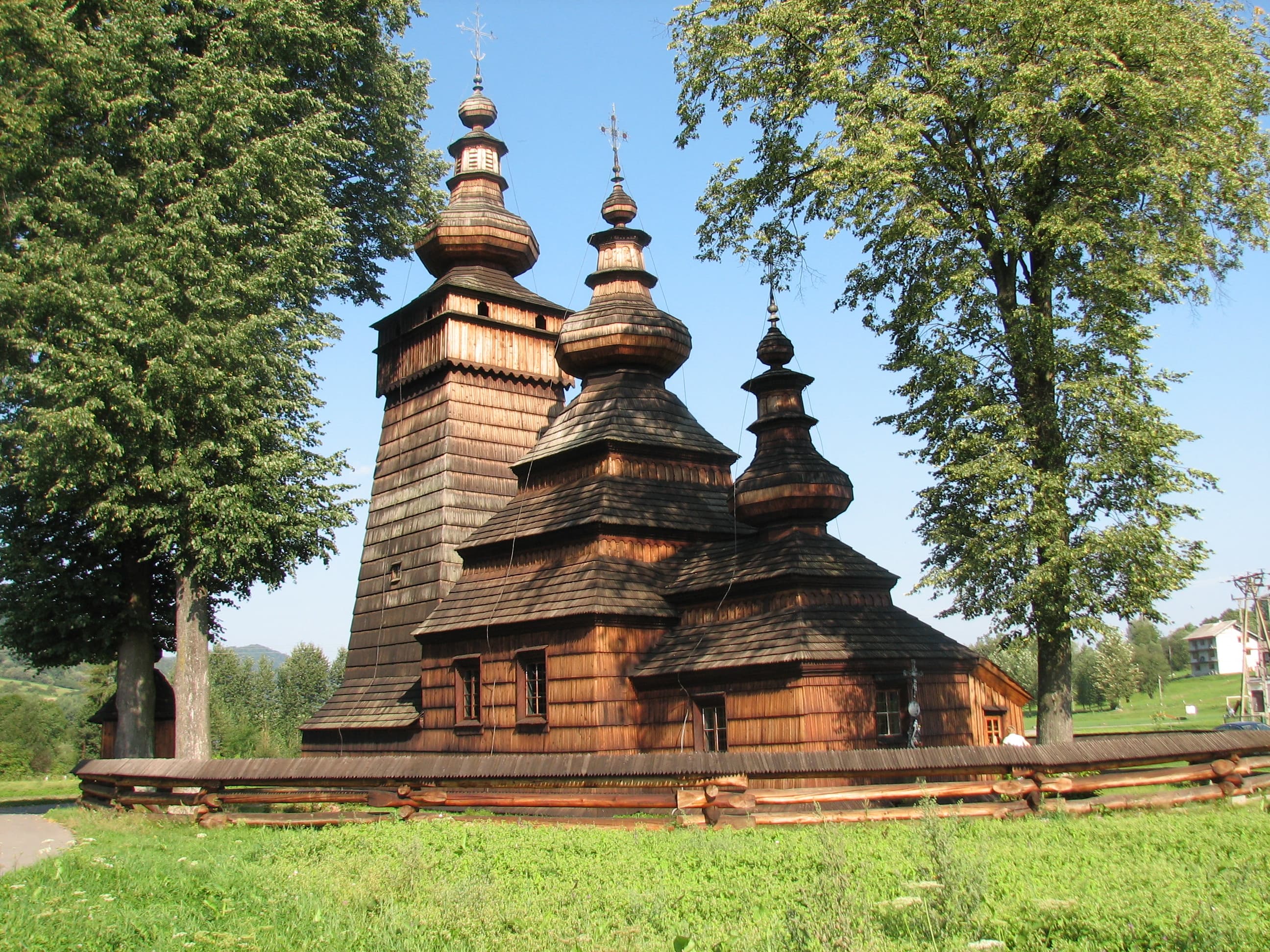
Kwiatoń matters because UNESCO identifies it as one of the defining Polish Carpathian tserkvas, while Wikidata and Commons make clear that its eastern Christian form survives within a church whose confessional story later shifted.
Visitor essentials
What stands out
Scope note
Keep in view
Do not write Kwiatoń as if one denomination fully explains it; keep form, rite-history, and current church life together.
At a glance
Before you visit
A Lemko tserkva whose eastern Christian form still shapes the sacred atmosphere even after later Catholic realignment
Why it matters
UNESCO identifies Kwiatoń as one of the Polish tserkvas that define the Carpathian serial property, giving it value as part of a wider eastern Christian timber-building tradition rather than as a single photogenic stop.
That matters here because Wikidata and Commons keep the exact church tied both to its eastern Christian tserkva form and to later Catholic alignment, making the page stronger when it acknowledges continuity and change together.
Respect notes
Visiting notes
Story and context
History and sacred context
Sources
- Official websitePrimary visitor-facing site for current access and institutional context.
- UNESCO entryPrimary authority source for the transnational Carpathian wooden tserkva property.
- Wikipedia entryWikipedia article for Saint Paraskevi church in Kwiatoń.
- Wooden Tserkvas of the Carpathian Region in Poland and Ukraine (Property 1424)Primary authority source for the transnational Carpathian wooden tserkva property.
- Wooden Tserkvas of the Carpathian Region in Poland and Ukraine - MapsOfficial component table for the inscribed tserkvas, including Kwiatoń as 1424-004.
- Saint Paraskevi church in Kwiatoń (Q4261794)Entity anchor for the Kwiatoń tserkva and its layered eastern Christian and Catholic history.
- Category:Paraskevi of Iconium church in KwiatońVisual and structured context for the Kwiatoń church, including exterior and interior views.
- Saint Paraskevi church in KwiatońWikipedia article for Saint Paraskevi church in Kwiatoń.
- St. Paraskeva Greek-Catholic Church, Kwiaton (UNESCO List)Official Wooden Architecture Trail page for the former Greek-Catholic church of Saint Paraskeva in Kwiatoń.
Nearby places
Nearby sacred places in Central Europe

Church of Our Lady's Protection, Owczary
A seventeenth-century tserkva where eastern Christian form and later Catholic parish life still remain visibly entangled.
.jpg&w=3840&q=75)
Church of All Saints, Blizne
A fortified-feeling village church whose timber body and Catholic continuity still give the Blizne landscape a strongly devotional center of gravity.
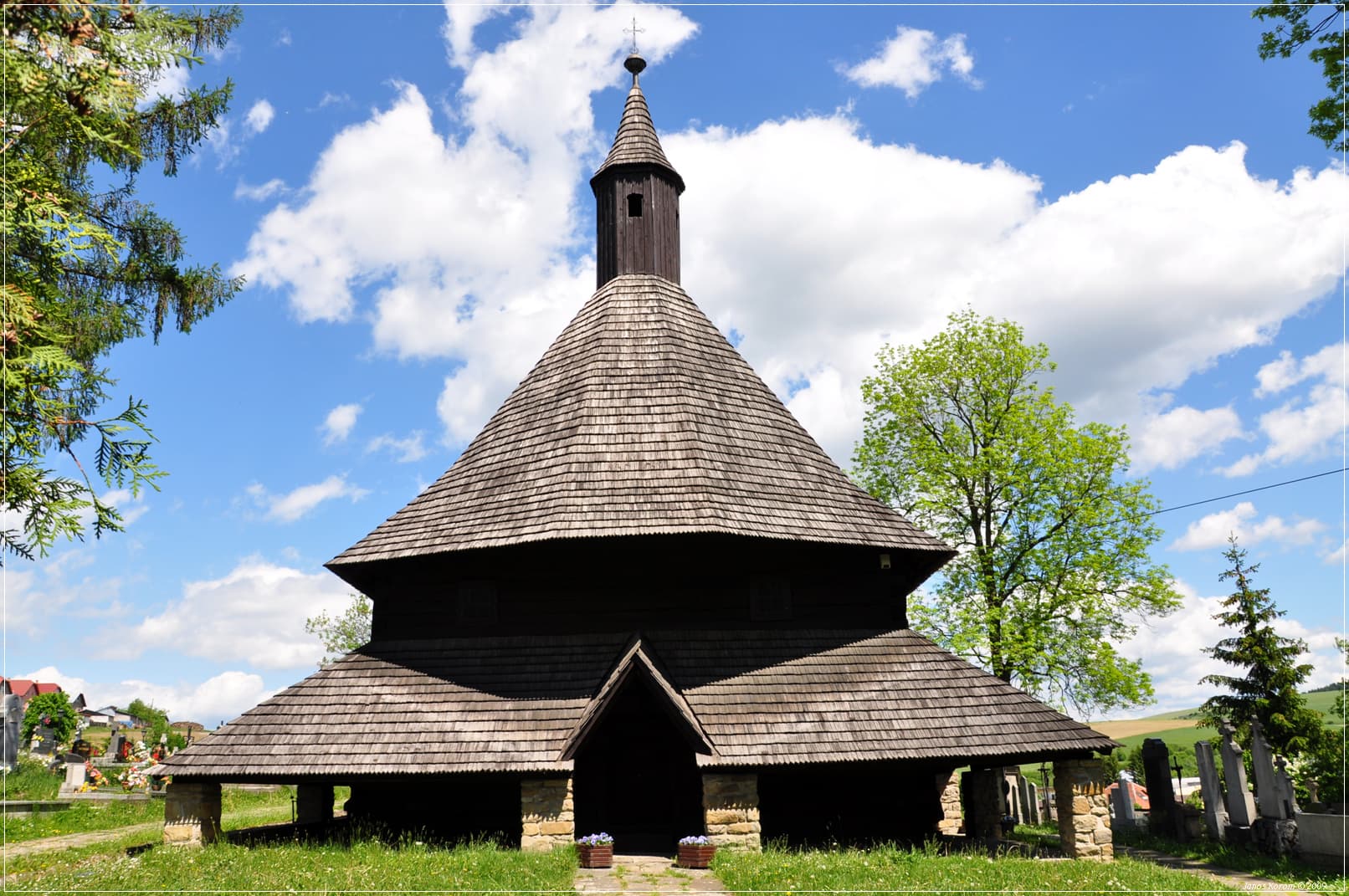
Church of All Saints, Tvrdošín
A late-Gothic wooden church whose Roman Catholic continuity is still carried by timber walls, village scale, and a calm hillside presence.
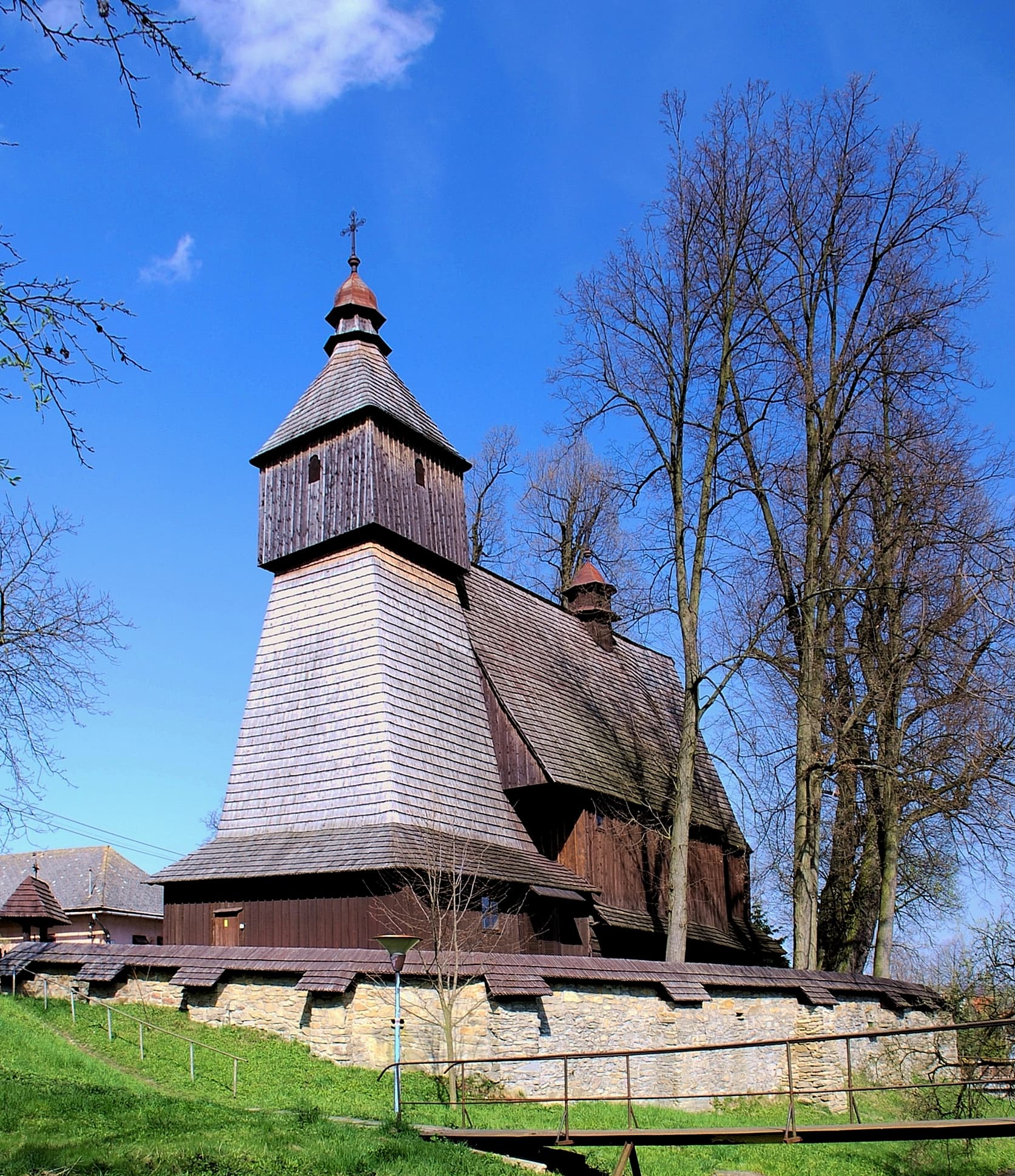
Church of Saint-Francis of Assisi, Hervartov
A late-medieval Roman Catholic wooden church whose modest village setting still carries the weight of centuries of worship and painted devotion.
Keep exploring