Living sacred site
Church of Saint-Francis of Assisi, Hervartov
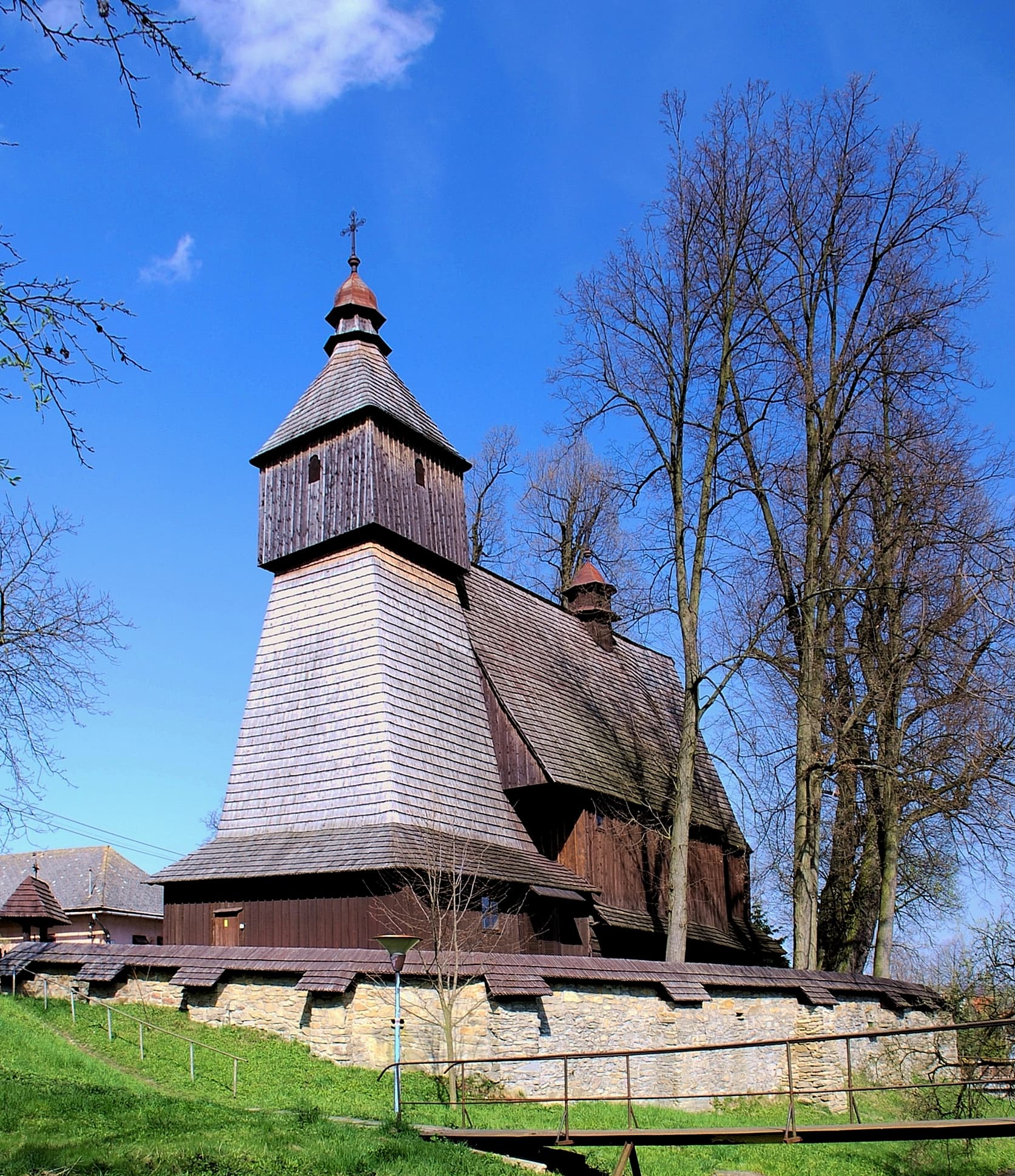
Hervartov matters because UNESCO identifies it as one of the Slovak Carpathian wooden churches where Latin and Byzantine cultural worlds met at close range, while Wikidata and Commons keep the exact church anchored as a Roman Catholic building rather than a generic timber monument.
Visitor essentials
What stands out
Scope note
Keep in view
Keep the church's village scale visible so the page does not overinflate it into an abstract World Heritage emblem.
At a glance
Before you visit
A late-medieval Roman Catholic wooden church whose modest village setting still carries the weight of centuries of worship and painted devotion
Why it matters
UNESCO presents the Slovak Carpathian churches as a rare sacred series where Roman Catholic, Protestant, and Greek Christian traditions coexist in one small territory, and Hervartov is the Roman Catholic component at the head of that sequence.
That matters here because Wikidata and Commons keep Hervartov tied to its exact Catholic identity, Gothic wooden construction, and village location instead of letting it blur into a generic church type.
Respect notes
Visiting notes
Story and context
History and sacred context
Sources
- Official websitePrimary visitor-facing site for current access and institutional context.
- UNESCO entryPrimary authority source for the Slovak Carpathian wooden church serial property and its confessional diversity.
- Wikipedia entryWikipedia article for Church of Saint-Francis of Assisi.
- Wooden Churches of the Slovak part of the Carpathian Mountain Area (Property 1273)Primary authority source for the Slovak Carpathian wooden church serial property and its confessional diversity.
- Wooden Churches of the Slovak part of the Carpathian Mountain Area - MapsOfficial component table for the inscribed churches, including Hervartov as 1273-001.
- Church of Saint-Francis of Assisi (Q336354)Entity anchor for the Hervartov church as a Roman Catholic UNESCO component.
- Category:Church of St Francis of Assisi, HervartovVisual context for the Hervartov church, including exterior and interior views.
- Church of Saint-Francis of AssisiWikipedia article for Church of Saint-Francis of Assisi.
- Kostolik Sv. Frantiska z AssisiOfficial village page for the Church of Saint Francis of Assisi in Hervartov with opening guidance and local contact details.
Nearby places
Nearby sacred places in Central Europe
.jpg&w=3840&q=75)
Church of All Saints, Blizne
A fortified-feeling village church whose timber body and Catholic continuity still give the Blizne landscape a strongly devotional center of gravity.
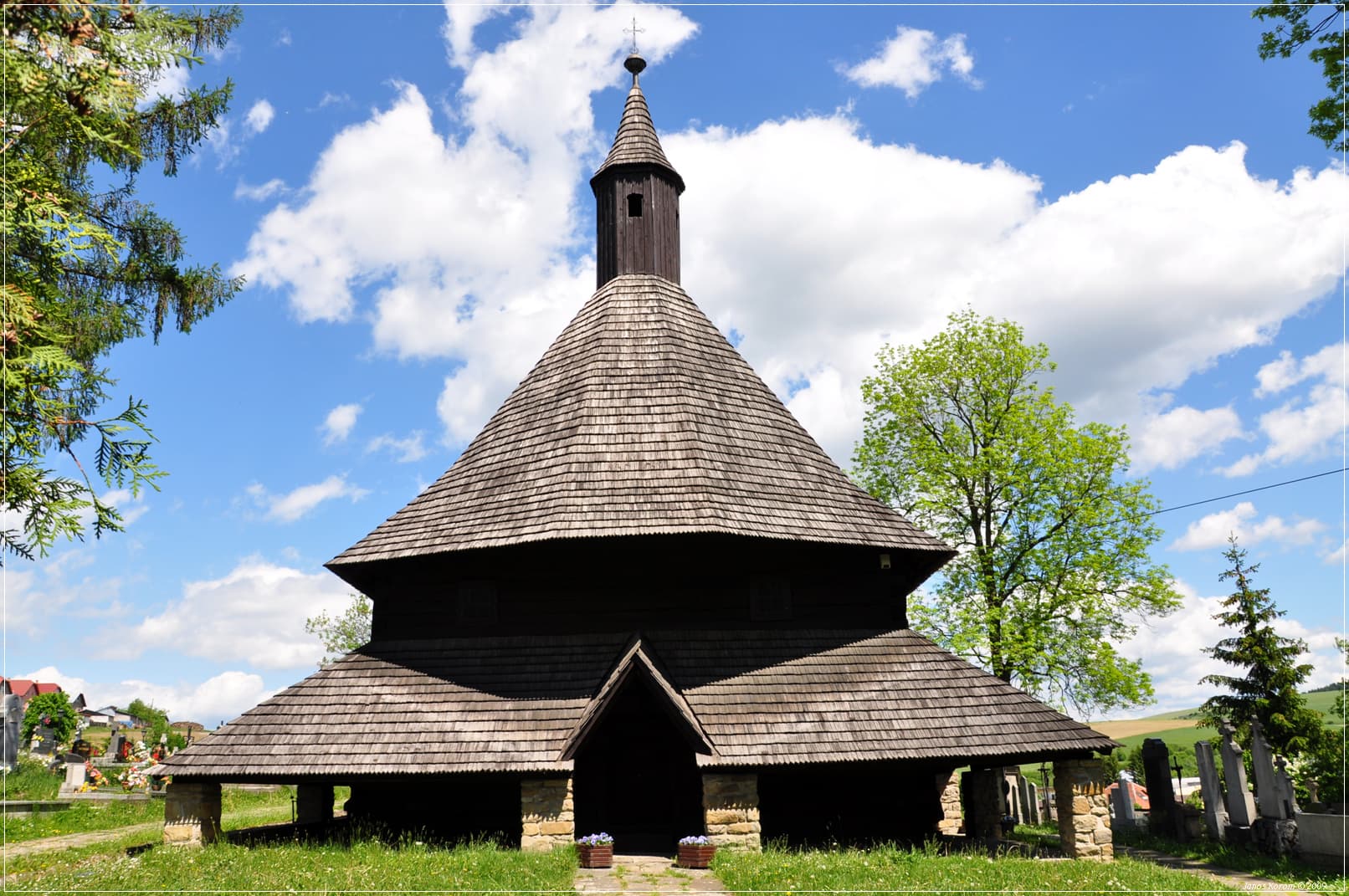
Church of All Saints, Tvrdošín
A late-Gothic wooden church whose Roman Catholic continuity is still carried by timber walls, village scale, and a calm hillside presence.
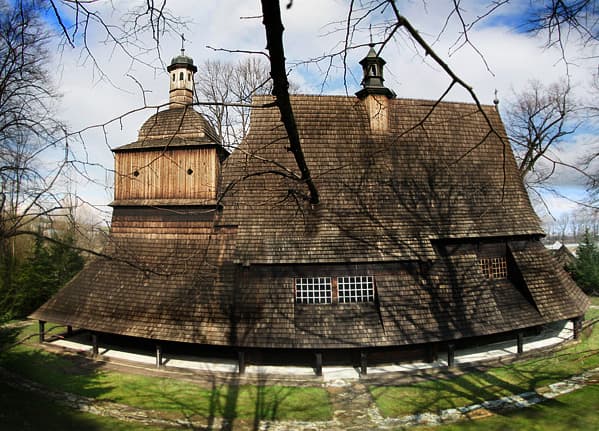
Church of St. Philip and St. James the Apostles, Sękowa
A roof-heavy wooden church whose long protective arcades still make Sękowa feel like a devotional shelter before it feels like a historic stop.

Church of the Archangel Michael, Binarowa
A timber church in southern Poland where medieval Catholic continuity still feels inseparable from the village, the fence line, and the shingled roofscape.
Keep exploring