Historical sacred site

Jelling Mounds, Runic Stones, and Church

Jelling, Denmark · Christianity · Royal memorial landscape and church

Jelling matters because UNESCO and Kongernes Jelling treat it not as a single monument but as a conversion landscape: one mound and runestone preserve pagan Nordic culture, while the other stone and the church mark Christianity becoming the official religion in Denmark.
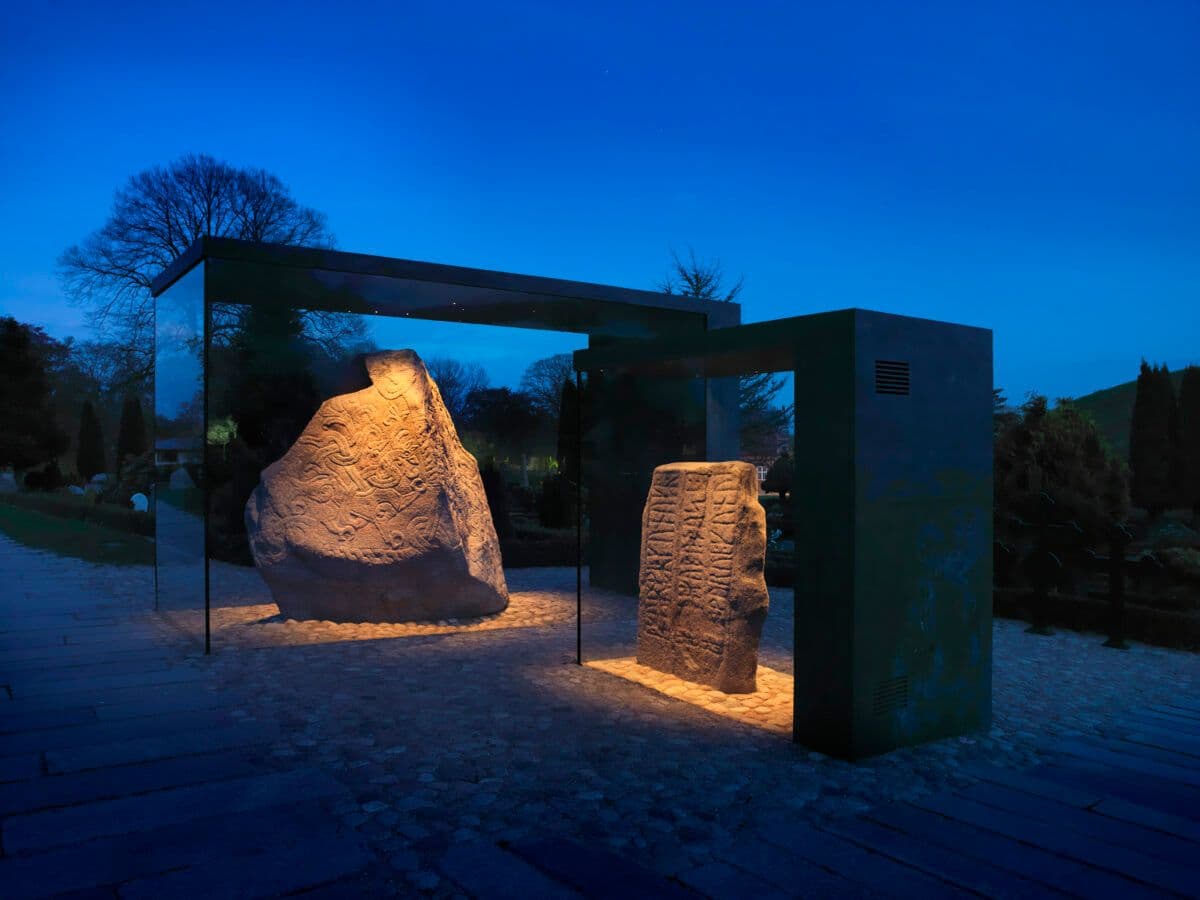
The Jelling stones illuminated inside their display cases at Jelling, Denmark.
Photo by Roberto Fortuna via Kongernes JellingSourceCC BY-SA 2.0
GeographyEurope · Denmark · Nordics
TraditionChristianity
EvidenceHistorical sacred site
SeasonLate spring to early autumn
AccessManaged heritage access

Visitor essentials

LocationJelling, Denmark
Best seasonLate spring to early autumn
AccessManaged heritage access
OrientationA royal monument area where burial mounds, runic stones, and church still make Denmark's shift from pagan kingship to Christianity legible on one site.
Official informationCurrent visitor information
Route valueBest used inside Nordics rather than as a disconnected stop.

What stands out

Kongernes Jelling is the strongest local source because it keeps the monuments, Christianity, kingship, and Danish origin story in one interpretive frame.

Scope note

Keep in view

Keep the pagan-to-Christian transition visible instead of flattening the site into only nation-building symbolism.

At a glance

Before you visit

A royal monument area where burial mounds, runic stones, and church still make Denmark's shift from pagan kingship to Christianity legible on one site

What it isJelling matters because UNESCO and Kongernes Jelling treat it not as a single monument but as a conversion landscape: one mound and runestone preserve pagan Nordic culture, while the other stone and the church mark Christianity becoming the official religion in Denmark.
Why it mattersUNESCO describes the burial mounds and one runic stone as outstanding examples of pagan Nordic culture, while the other runic stone and the church illustrate the Christianization of the Danish people in the mid-10th century.
ContextUNESCO is the key source here because it makes the mixed pagan and Christian significance explicit instead of forcing the site into a single religious phase.
Visiting todayThe monument area and visitor interpretation are easiest in the main open season; check current Kongernes Jelling opening hours before planning a focused visit.
Best time to goBest season is Late spring to early autumn.
How it fits a routeTreat Nordics as the main cluster and combine this stop with Gamla Uppsala instead of isolating it from the wider sacred geography.

Why it matters

UNESCO describes the burial mounds and one runic stone as outstanding examples of pagan Nordic culture, while the other runic stone and the church illustrate the Christianization of the Danish people in the mid-10th century.

That matters because the large Harald Bluetooth stone does not only commemorate a ruler: UNESCO notes that it proclaims that Harald won Denmark and Norway and made the Danes Christians, while also bearing Scandinavia's earliest depiction of Christ.

Kongernes Jelling makes the same transition explicit by naming the site as the place where Christianity became the official religion in Denmark and where the change from Nordic pagan society to European Christian civilization was marked.

Respect notes

Treat Jelling as a transition landscape where pagan burial memory and Christian proclamation stand in tension, not as a simple church visit.
Keep the church, stones, and mounds together in the same frame, because UNESCO treats the site's meaning as something expressed collectively rather than by any one element alone.

Visiting notes

A slower visit matters because the site only fully makes sense when you move between the mounds, the stones, and the church rather than stopping at one monument.
Use the official Kongernes Jelling interpretation on site, because the wider monument area and museum framing help explain the political and religious transition the stones alone can only suggest.

Story and context

History and sacred context

UNESCO is the key source here because it makes the mixed pagan and Christian significance explicit instead of forcing the site into a single religious phase.

Wikidata is most useful as a precise entity anchor for the heritage site rather than as the main interpretive source.

Sources

  • Official websiteOfficial sitePrimary visitor-facing site for current access and institutional context.
  • UNESCO entryUNESCO World Heritage CentreAuthority source for the site's pagan Nordic monuments, Christianization significance, and Outstanding Universal Value.
  • Wikipedia entryWikipediaWikipedia article for Jelling Mounds, Runic Stones, and Church.
  1. Jelling Mounds, Runic Stones and Church (Property 697)UNESCO World Heritage Centre · Heritage authorityAuthority source for the site's pagan Nordic monuments, Christianization significance, and Outstanding Universal Value.Accessed 2026-04-24
  2. UNESCO World Heritage Site JellingKongernes Jelling · Official siteOfficial local source explaining why Jelling is a World Heritage Site and how it marks Christianity becoming the official religion in Denmark.Accessed 2026-04-24
  3. About Kongernes JellingKongernes Jelling · Official siteOfficial local source for the wider monument area, interpretation centre, and present-day visitor framing.Accessed 2026-04-24
  4. Jelling Mounds, Runic Stones and Church (Q4993586)Wikidata · Entity referenceEntity anchor for the Jelling World Heritage monument area in Denmark.Accessed 2026-04-24
  5. Jelling Mounds, Runic Stones, and ChurchWikipedia · Entity referenceWikipedia article for Jelling Mounds, Runic Stones, and Church.Accessed 2026-04-25
  6. Visit the Jelling StonesKongernes Jelling · Official siteOfficial monument page for the Jelling Stones and monument area.Accessed 2026-04-29

Nearby places

Nearby sacred places in Nordics

Keep exploring

Explore more