Living sacred site
Geghard Monastery
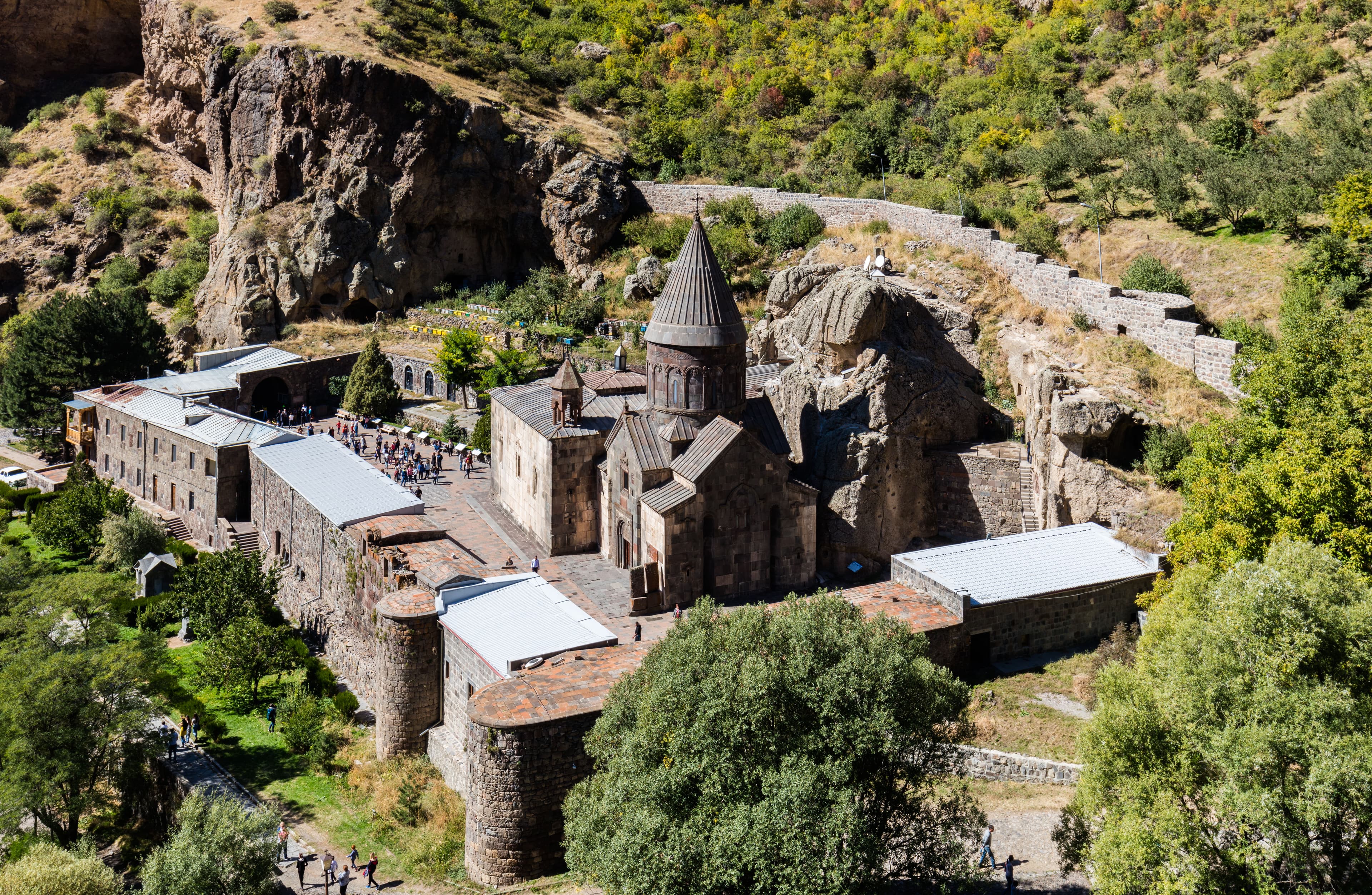
Geghard Monastery is one of the strongest sacred sites in Armenia, where monastic architecture, carved rock chambers, and the upper Azat Valley still work together as one devotional environment.
Visitor essentials
What stands out
Scope note
Keep in view
Keep Geghard tied to its valley and rock-cut sacred spaces rather than treating it as only a photogenic monastery facade.
At a glance
Before you visit
A monastery cut into rock and set inside a steep valley, where sacred enclosure and landscape feel inseparable
Why it matters
UNESCO describes Geghard as a monastery partly hewn out of the adjacent mountain and surrounded by cliffs at the entrance to the Azat Valley, emphasizing the close union of architecture and nature.
That matters here because the sacred force of the site depends on both monastic enclosure and valley setting: the place feels carved into devotion as much as into stone.
Respect notes
Visiting notes
Story and context
History and sacred context
Sources
- Official websitePrimary visitor-facing site for current access and institutional context.
- UNESCO entryPrimary authority source for Geghard's monastic and landscape significance.
- Wikipedia entryWikipedia article for Geghard.
- Geghard (Q499285)Entity anchor for Geghard Monastery as an Armenian Apostolic monastic complex.
- Monastery of Geghard and the Upper Azat Valley (Q17155656)Entity anchor for the broader world-heritage property that includes Geghard and the Upper Azat Valley.
- Monastery of Geghard and the Upper Azat Valley (Property 960)Primary authority source for Geghard's monastic and landscape significance.
- Category:GeghardVisual context for Geghard's courtyards, carved churches, and valley setting.
- GeghardWikipedia article for Geghard.
- Inspectorate of MonasteriesInstitution-managed Armenian Church page listing Holy Geghardavank under the jurisdiction of the Mother See's Inspectorate of Monasteries.
Keep exploring