Historical sanctuary
Cave 21, Ajanta
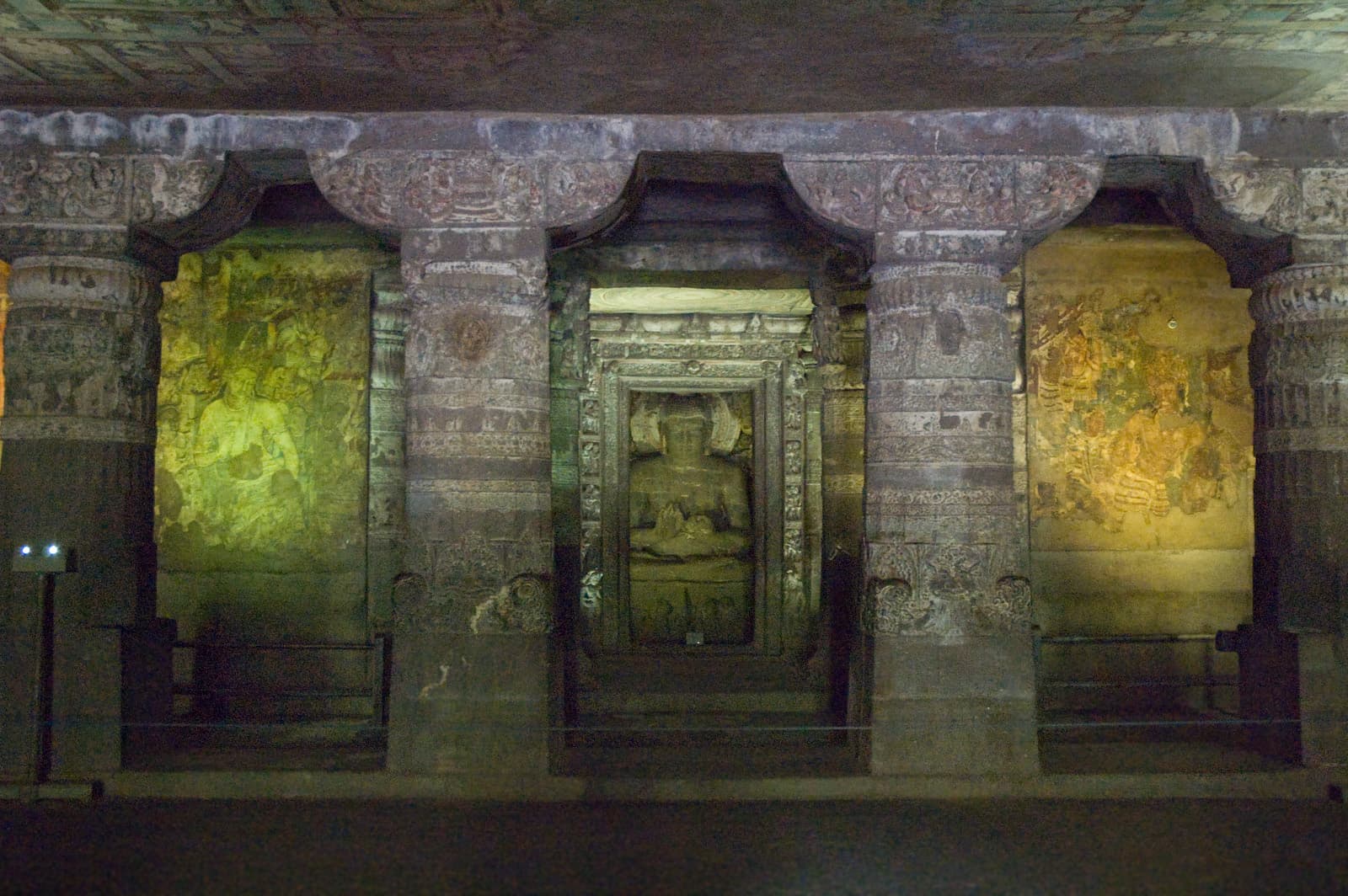
Cave 21, Ajanta is the large vihara whose shrine, side chapels, and columns still preserve one of Ajanta's fuller later monastic interiors, and it is distinguished by the way columns, side chapels, and teaching imagery keep the cave legible as a rich Buddhist devotional and instructional environment.
.jpg&w=3840&q=75)
Visitor essentials
What stands out
Scope note
Keep in view
Keep Cave 21, Ajanta visible as the large vihara whose shrine, side chapels, and columns still preserve one of Ajanta's fuller later monastic interiors rather than reducing it to only another large cave beyond Ajanta's better-known painted and chaitya halls.
At a glance
Before you visit
A monastery cave in the Ajanta cliff sanctuary where columns, side chapels, and teaching imagery keep the cave legible as a rich Buddhist devotional and instructional environment
Why it matters
Respect notes
Visiting notes
Story and context
History and sacred context
Sources
- Official websitePrimary visitor-facing site for current access and institutional context.
- UNESCO entryPrimary authority source for Ajanta as a Buddhist rock-cut sanctuary of chaityagrihas and viharas with major mural and sculptural programs.
- Wikipedia entryWikipedia article for Ajanta Caves.
- Ajanta Caves (Property 242)Primary authority source for Ajanta as a Buddhist rock-cut sanctuary of chaityagrihas and viharas with major mural and sculptural programs.
- Ajanta Caves (Q184427)Entity anchor for the Ajanta Caves as a Buddhist rock-cut complex in Maharashtra.
- Category:Cave 21, AjantaVisual context for Cave 21, including its hall, side chapels, shrine imagery, and pillar program.
- Ajanta CavesWikipedia article for Ajanta Caves.
- Archaeological Survey of India, Aurangabad CircleInstitution-managed Archaeological Survey of India circle site for Ajanta and Ellora, presenting the responsible authority for the Ajanta cave complex and its visitor-facing heritage materials.
Nearby places
Nearby sacred places in South Asia
Cave 1, Ajanta
A monastery cave in the Ajanta cliff sanctuary where shrine hall, monastic space, and mural program still hold together as one concentrated Buddhist devotional environment.
.jpg&w=3840&q=75)
Cave 11, Ajanta
A monastery cave in the Ajanta cliff sanctuary where shrine room, cells, and interior proportions keep the cave legible as a lived religious space rather than a minor recess between larger monuments.
.jpg&w=3840&q=75)
Cave 12, Ajanta
A monastery cave in the Ajanta cliff sanctuary where a more austere hall and cell arrangement still communicate the disciplined sacred logic of early monastic cave architecture.
Cave 13, Ajanta
A monastery cave in the Ajanta cliff sanctuary where small size and simple excavation do not erase the cave's role as part of the Buddhist monastic environment of Ajanta.
Regional journeys
Journeys in South Asia
Ajanta Painted Vihara Circuit
A cliffside Buddhist route that reads Ajanta through its major painted monastery caves rather than treating the site as one viewpoint plus a few famous murals.
Ajanta Chaitya Hall Route
An Ajanta route that reads the cliff sanctuary through its chaitya halls rather than only through painted monastery caves.
Keep exploring