Historical sanctuary
Ajanta Caves
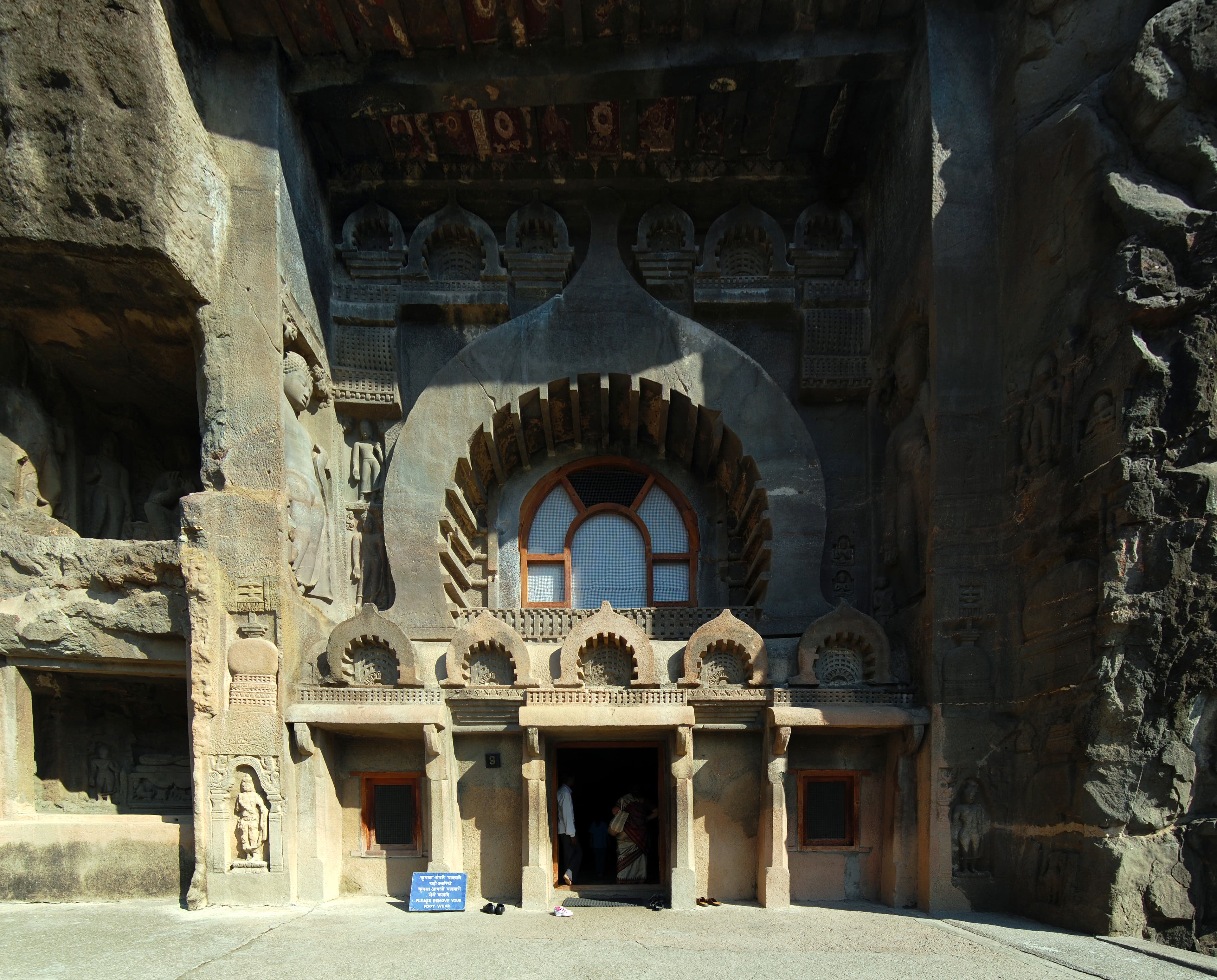
Ajanta is one of the great Buddhist rock-cut complexes of the world, remarkable not only for its caves and murals but for the way the whole cliffside setting supports the sacred atmosphere of the site.
Visitor essentials
What stands out
Scope note
Keep in view
Treat Ajanta as a full monastic and artistic sacred environment, not only as a gallery of famous cave paintings.
At a glance
Before you visit
A cliffside Buddhist cave complex where painting, monastic architecture, and river-valley setting all shape the encounter
Why it matters
UNESCO describes Ajanta as one of the greatest achievements in ancient Buddhist rock-cut architecture, with caves, paintings, sculptures, and inscriptions that document the development of Buddhism over centuries.
That makes Ajanta especially important as a sacred-travel site because it combines sacred art, monastic space, and dramatic landscape instead of offering only a series of disconnected cave interiors.
Respect notes
Visiting notes
Story and context
History and sacred context
Sources
- Official websitePrimary visitor-facing site for current access and institutional context.
- UNESCO entryPrimary authority source for Ajanta's Buddhist architecture, painting, and significance.
- Wikipedia entryWikipedia article for Ajanta Caves.
- Ajanta Caves (Q184427)Entity anchor for the Ajanta Caves as a Buddhist rock-cut complex.
- Ajanta Caves (Property 242)Primary authority source for Ajanta's Buddhist architecture, painting, and significance.
- Category:Ajanta CavesVisual context for the cliffside caves, paintings, and surrounding landscape.
- Ajanta CavesDirect official monument page for Ajanta Caves on the Archaeological Survey of India's live site.
- Ajanta CavesWikipedia article for Ajanta Caves.
Nearby places
Nearby sacred places in South Asia
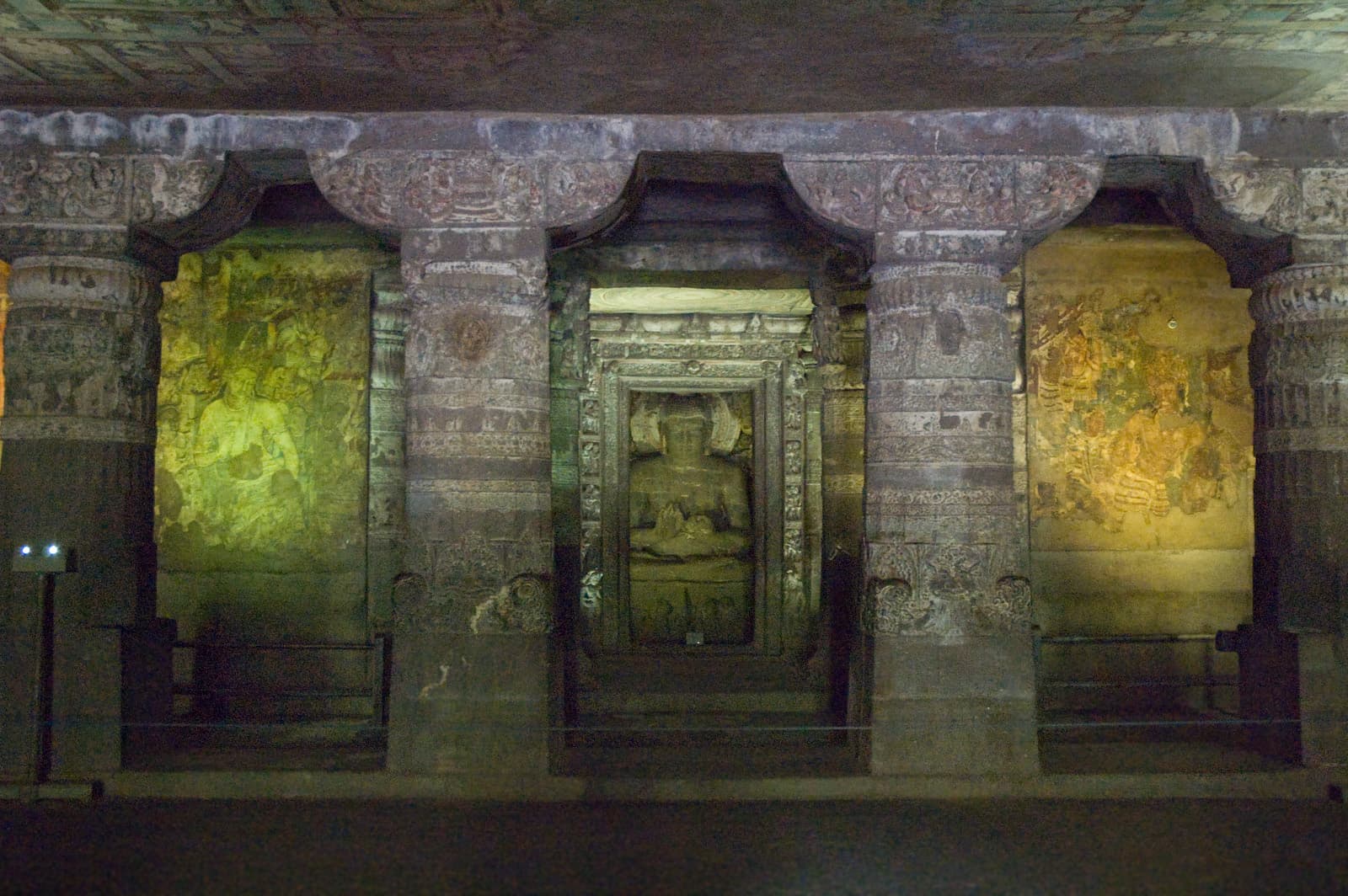
Cave 1, Ajanta
A monastery cave in the Ajanta cliff sanctuary where shrine hall, monastic space, and mural program still hold together as one concentrated Buddhist devotional environment.
.jpg&w=3840&q=75)
Cave 16, Ajanta
A monastery cave in the Ajanta cliff sanctuary where entry sculpture, shrine Buddha, and mural remains keep this cave legible as a fully staged Buddhist sacred interior.
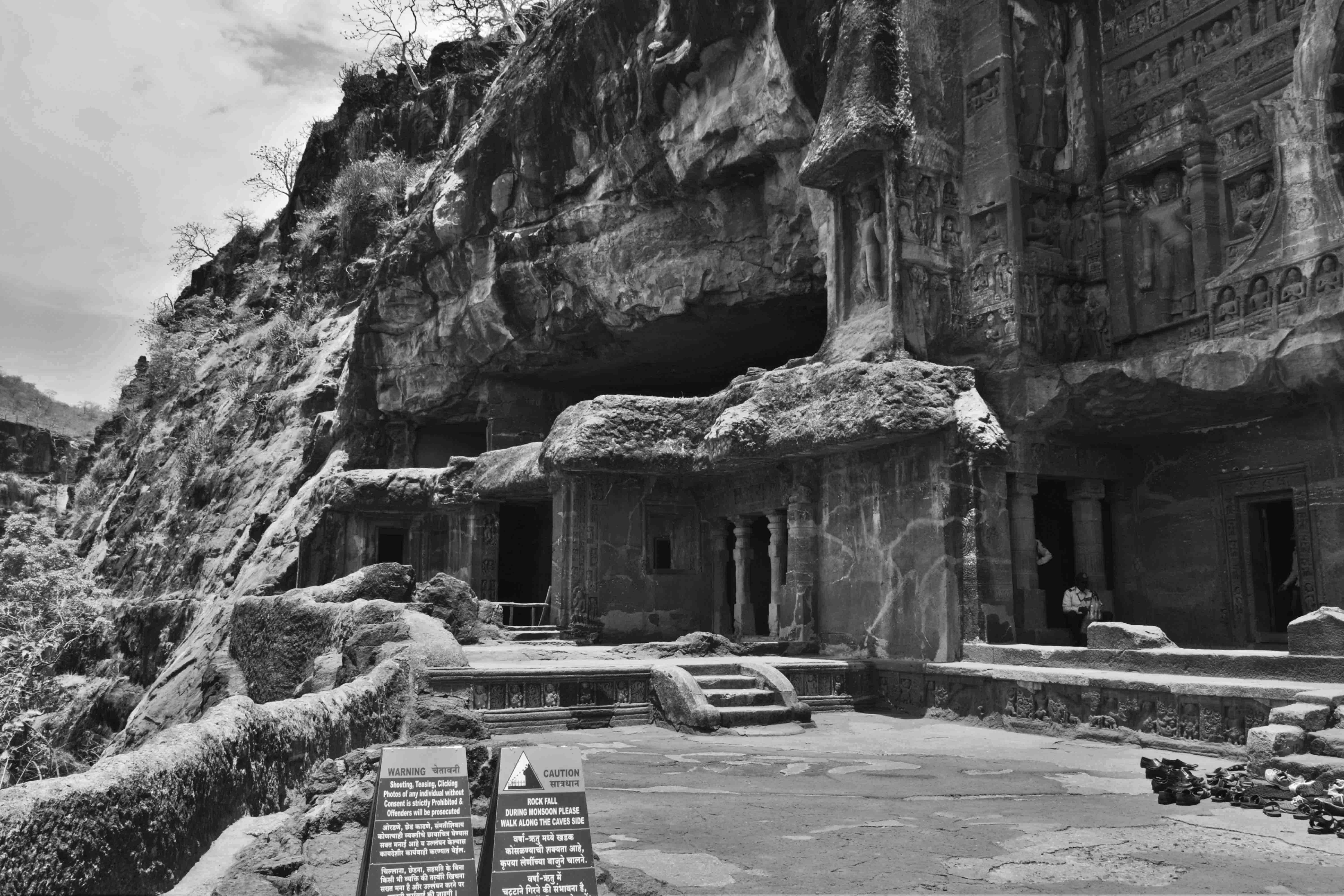
Cave 17, Ajanta
A monastery cave in the Ajanta cliff sanctuary where image cycle, shrine space, and monastic hall still make the cave feel like a coherent Buddhist teaching and devotional chamber.
.jpg&w=3840&q=75)
Cave 19, Ajanta
A chaitya hall in the Ajanta cliff sanctuary where facade sculpture, interior nave, and stupa-centered worship form still read together as one ceremonial Buddhist space.
On the same route
Places on the same route
Cave 1, Ajanta
A monastery cave in the Ajanta cliff sanctuary where shrine hall, monastic space, and mural program still hold together as one concentrated Buddhist devotional environment.
.jpg&w=3840&q=75)
Cave 2, Ajanta
A monastery cave in the Ajanta cliff sanctuary where its ceiling, wall paintings, pillars, and shrine space preserve an immersive Buddhist interior rather than a bare excavated hall.
Cave 16, Ajanta
A monastery cave in the Ajanta cliff sanctuary where entry sculpture, shrine Buddha, and mural remains keep this cave legible as a fully staged Buddhist sacred interior.
Cave 17, Ajanta
A monastery cave in the Ajanta cliff sanctuary where image cycle, shrine space, and monastic hall still make the cave feel like a coherent Buddhist teaching and devotional chamber.
Related journeys
Related journeys
Ajanta Painted Vihara Circuit
A cliffside Buddhist route that reads Ajanta through its major painted monastery caves rather than treating the site as one viewpoint plus a few famous murals.
Ajanta Chaitya Hall Route
An Ajanta route that reads the cliff sanctuary through its chaitya halls rather than only through painted monastery caves.
Keep exploring