Historical sanctuary
Yumechigai Kannon, Horyu-ji
Yumechigai Kannon, Horyu-ji matters because the statue's protective reputation still helps it read as a sacred image rather than as a small early bronze shown in a gallery case.

Visitor essentials
What stands out
Scope note
Keep in view
Keep Yumechigai Kannon framed as a protective devotional image, not just as a small early bronze.
At a glance
Before you visit
The dream-changing Kannon of Horyu-ji, where protection and hope remain part of the image's meaning
Why it matters
UNESCO frames Buddhist Monuments in the Horyu-ji Area as an early Buddhist precinct where triads, guardian statues, ritual canopies, and celebrated Kannon figures preserve the devotional world of Horyu-ji within the Buddhist Monuments in the Horyu-ji Area, and the supporting site sources keep Yumechigai Kannon, Horyu-ji legible as a sacred image within Horyu-ji's sacred image world within the Buddhist Monuments in the Horyu-ji Area.
That matters because Yumechigai Kannon, Horyu-ji is strongest as the dream-changing Kannon of Horyu-ji's Great Treasure Gallery whose protective reputation still shapes the way the image is received rather than only a small bronze image admired for its age.
Respect notes
Visiting notes
Story and context
History and sacred context
Sources
- Official websitePrimary visitor-facing site for current access and institutional context.
- UNESCO entryPrimary authority source for the Horyu-ji area as an early Buddhist monument landscape central to the spread of Buddhism in Japan.
- Wikipedia entryWikipedia article for Hōryū-ji Temple.
- Buddhist Monuments in the Horyu-ji Area (Property 660)Primary authority source for the Horyu-ji area as an early Buddhist monument landscape central to the spread of Buddhism in Japan.
- Hōryū-ji Temple (Q261932)Entity anchor for Horyu-ji as a Buddhist temple and component of the Horyu-ji world heritage property.
- Category:Hōryū-jiVisual context for Horyu-ji as a Buddhist precinct of halls, pagodas, gates, and courtyards in Ikaruga.
- Buddha - Main HallOfficial Horyu-ji page detailing the sacred images, guardian statues, and canopies of the Golden Hall.
- Hall of DreamsOfficial Horyu-ji page describing Yumedono and the Kuse Kannon as a periodically unveiled object of worship.
- Great Treasure GalleryOfficial Horyu-ji page describing the Great Treasure Gallery and its enshrined or housed sacred images and shrine objects.
- Category:Yumetagae KannonVisual context for the Horyu-ji image commonly called Yumechigai or Yumetagae Kannon.
- Hōryū-ji TempleWikipedia article for Hōryū-ji Temple.
Nearby places
Nearby sacred places in Japan
%252C%2520known%2520as%2520Kudara%2520Kannon%2520(Kaekje%2520Kannon)%2520H%25C5%258Dry%25C5%25AB-ji%25202.jpg&w=3840&q=75)
Kudara Kannon, Horyu-ji
Horyu-ji's tall crowned Kannon, where beauty and devotion remain inseparable.

Kuse Kannon, Horyu-ji
The hidden Kannon of Yumedono, where periodic unveiling still feels like an act of worship, not display.
.jpg&w=3840&q=75)
Shaka Triad, Horyu-ji
The central triad of Horyu-ji's Golden Hall, where early Buddhist sculpture still serves active devotion.
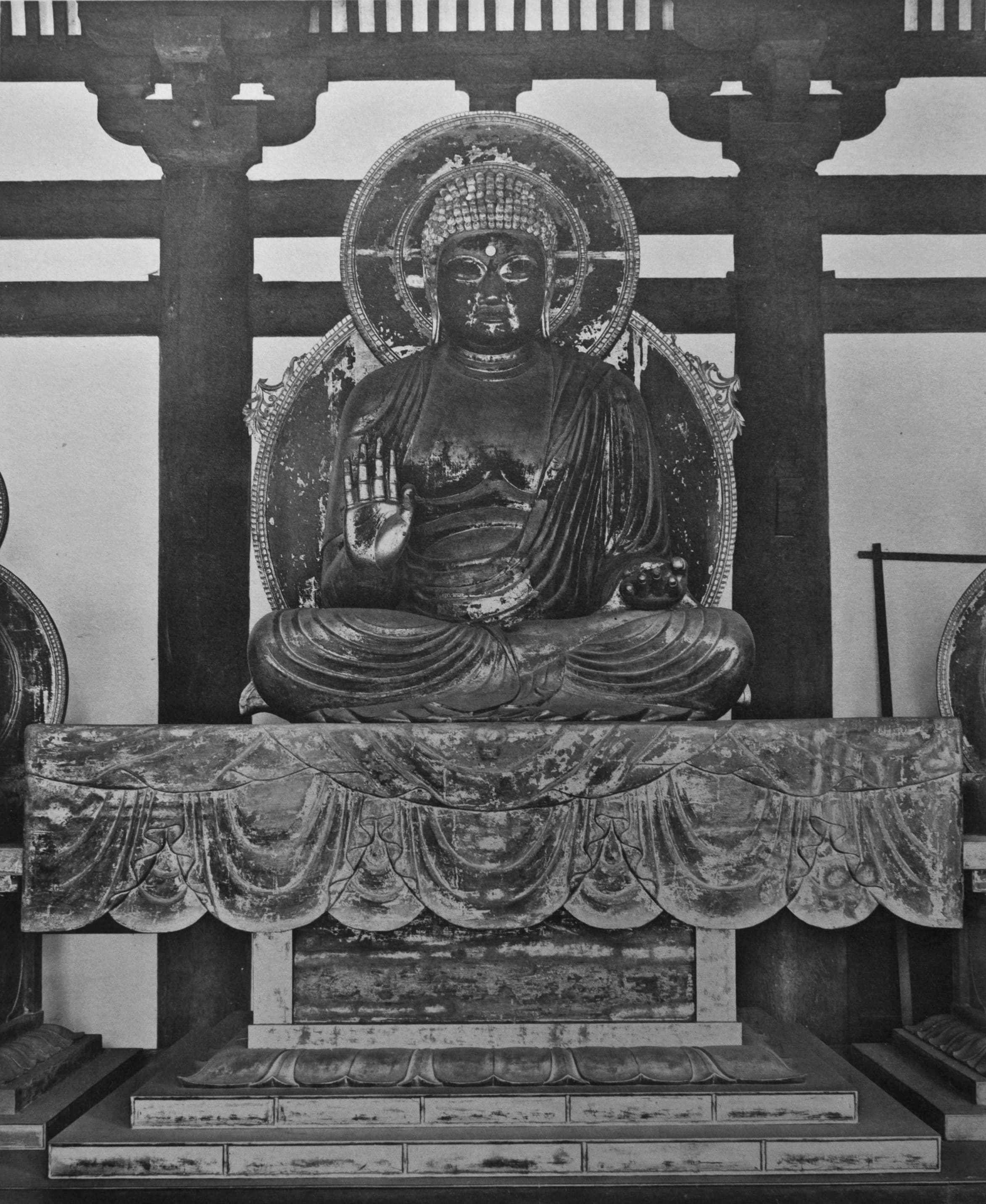
Shakyamuni Triad, Kami-no-Mido, Horyu-ji
A quieter Horyu-ji triad whose rare opening still feels like access to a living devotional center, not a stored treasure.
Regional journeys
Journeys in Japan
Horyu-ji Temple Sequence
A Horyu-ji route through pagoda, hall, and image-centered stops that reads the precinct as a layered early Buddhist complex rather than as a single famous building.
Horyu-ji Golden Hall Sequence
A compact Horyu-ji subroute through the Golden Hall and its image world, reading the precinct through one dense ritual and iconographic core rather than through the wider compound alone.
Keep exploring