Living sacred site
Mission of San Rafael
The Mission of San Rafael is strongest when the church is kept inside the wider mission ensemble UNESCO recognizes, because the sacred meaning of the place depends on settlement continuity as much as on architecture.

Visitor essentials
What stands out
Scope note
Keep in view
Keep San Rafael ensemble-based in the framing so the mission stays devotional and communal rather than purely architectural.
At a glance
Before you visit
A living Chiquitos mission where church, carved wood, and settlement continuity still reinforce one another around a sacred town center
Why it matters
UNESCO describes the Chiquitos missions as a living heritage of six surviving mission ensembles, and San Rafael matters because it keeps the church-and-town sacred pattern visible within that group.
That matters here because the site is not only a restored church. It is part of a Christian mission settlement in which architecture, local craft traditions, and community continuity still belong together.
Respect notes
Visiting notes
Story and context
History and sacred context
Sources
- Official websitePrimary visitor-facing site for current access and institutional context.
- UNESCO entryPrimary authority source for the Chiquitos missions as living mission ensembles and for San Rafael as one of the six surviving components.
- Wikipedia entryWikipedia article for San Rafael de Velasco.
- Jesuit Missions of the Chiquitos (Property 529)Primary authority source for the Chiquitos missions as living mission ensembles and for San Rafael as one of the six surviving components.
- San Rafael de Velasco (Q746773)Entity anchor for San Rafael de Velasco, whose official name includes Mission of San Rafael and which is listed as part of the Jesuit Missions of Chiquitos.
- Wikimedia Commons search: San Rafael de Velasco churchVisual context for the church and mission-town setting at San Rafael de Velasco.
- San Rafael de VelascoWikipedia article for San Rafael de Velasco.
- Misiones Jesuíticas de ChiquitosOfficial Bolivian culture ministry page for the Chiquitos mission property, explicitly listing San Rafael among the protected mission municipalities.
Nearby places
Nearby sacred places in Andes

Mission of Concepcion
A living Chiquitos mission where church, plaza, and restored sacred woodwork still feel inseparable from the town around them.

Mission of San Francisco Javier
A living mission ensemble in Chiquitania where church, plaza, and carved-wood tradition still belong to one devotional townscape.
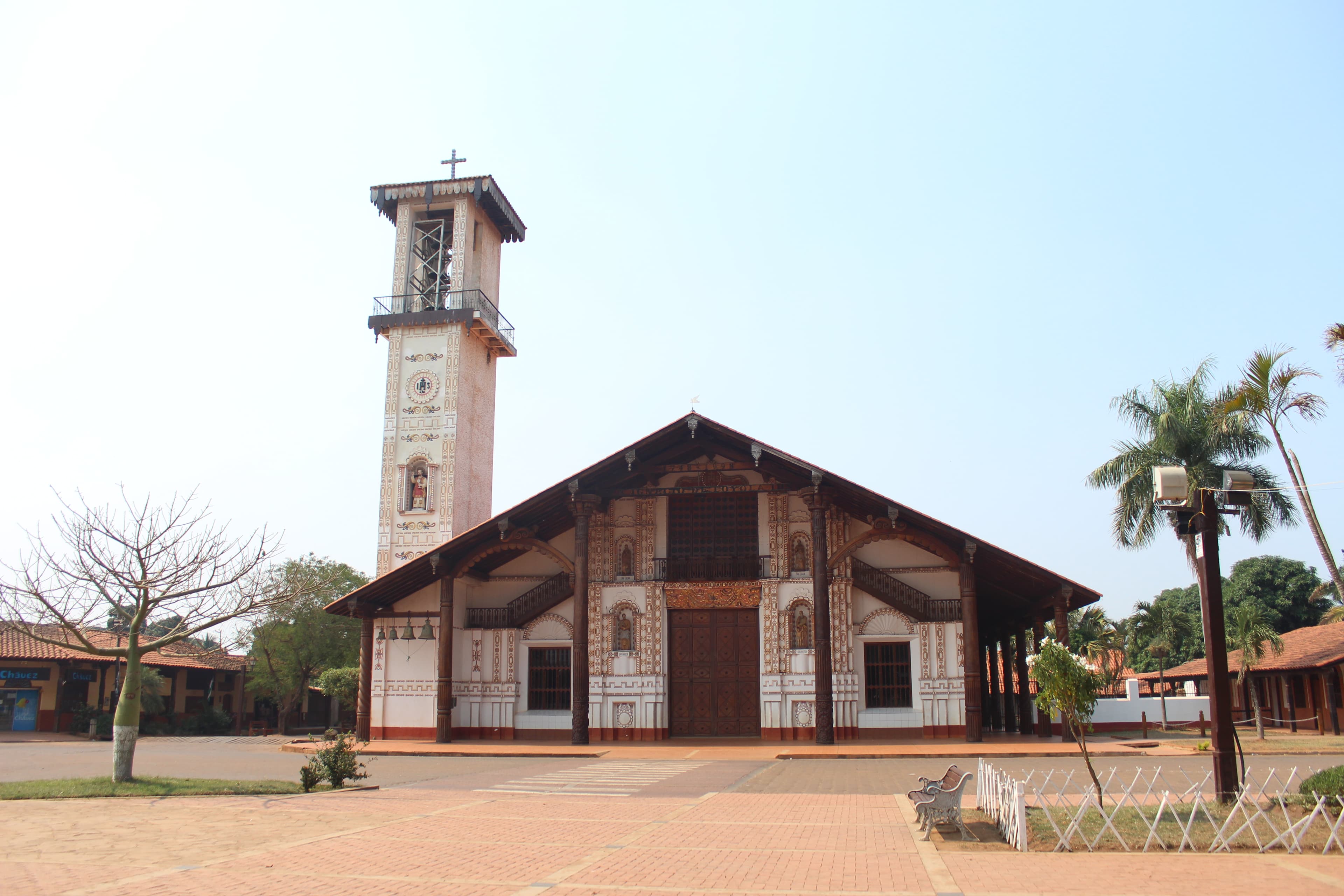
Mission of San Ignacio de Velasco
A mission ensemble in the Chiquitos mission sacred landscape where its continuing role as a church-centered mission town whose sacred identity still depends on the relation between church, plaza, and surrounding settlement rather than on one monumental facade alone.

Mission of San Javier
A mission ensemble in the Chiquitos mission sacred landscape where its continuing role as a church-centered mission town where plaza, carved wooden church space, and communal Christian life still keep it legible as a living sacred mission rather than only a restored colonial landmark.
Keep exploring