Historical sanctuary
Borobudur
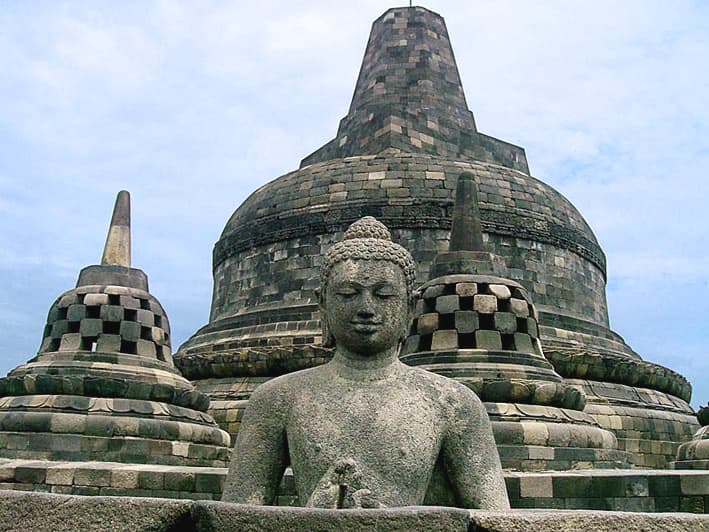
Borobudur is one of the clearest examples of Buddhist cosmology turned into landscape-scale architecture, with terraces, stupas, and relief sequences that reward slow movement and close looking.
Visitor essentials
What stands out
Scope note
Keep in view
The experience works best when the monument is treated as a ritual ascent, not just a viewpoint climb.
At a glance
Before you visit
A monumental Buddhist mandala in stone, read best as sacred topography rather than a single building
Why it matters
UNESCO describes Borobudur Temple Compounds as one of the greatest Buddhist monuments in the world, with a vertical composition that reflects key spheres of Buddhist cosmology and an ensemble that includes Borobudur, Mendut, and Pawon.
That makes Borobudur especially valuable for this site: it is not only a famous monument, but a place where sacred meaning is built into movement, elevation, and repeated visual rhythm.
Respect notes
Visiting notes
Story and context
History and sacred context
The UNESCO record is especially useful here because it frames Borobudur as both a masterpiece of Buddhist architecture and part of a larger ritual ensemble aligned with Mendut and Pawon.
PT Taman Wisata Candi's live Borobudur destination page is strong enough to anchor the monument directly because the government-owned site combines current visitor access with a temple-centered account of Borobudur as a Buddhist pilgrimage monument.
Sources
- Official websitePrimary visitor-facing site for current access and institutional context.
- UNESCO entryPrimary authority source for Borobudur's Buddhist cosmology and world-heritage significance.
- Wikipedia entryWikipedia article for Borobudur Temple Compounds.
- Borobudur Temple Compounds (Q29070)Entity anchor for the Borobudur Temple Compounds world-heritage ensemble.
- Borobudur Temple Compounds (Property 592)Primary authority source for Borobudur's Buddhist cosmology and world-heritage significance.
- Category:BorobudurVisual context for Borobudur's terraces, stupas, and reliefs.
- Category:Borobudur Temple CompoundsContext for the wider three-monument ensemble and surrounding heritage zone.
- BorobudurOfficial Borobudur destination page combining temple history, current visitor information, and direct ticket access on the government-owned site managing the Borobudur heritage park environment.
- About UsInstitutional page explaining that PT Taman Wisata Candi is the Indonesian government-owned operator responsible for the Borobudur heritage park environment as part of the InJourney state holding.
- Borobudur Temple CompoundsWikipedia article for Borobudur Temple Compounds.
Nearby places
Nearby sacred places in Southeast Asia
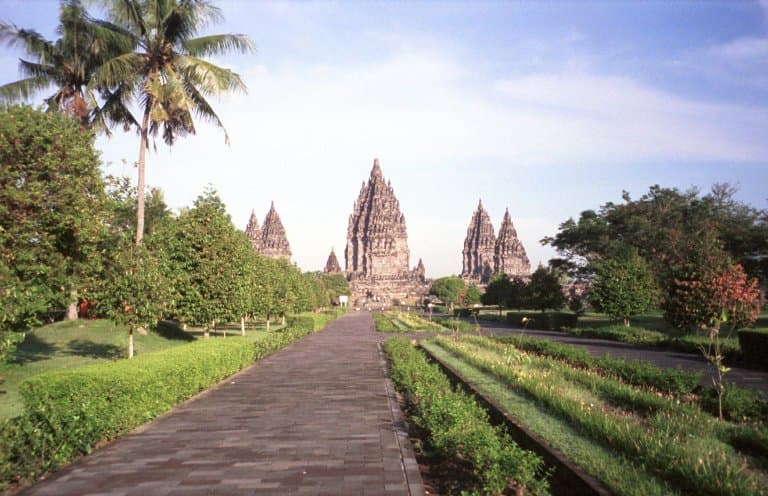
Prambanan
A towering Hindu temple ensemble where relief narrative, symmetry, and open space all shape the sacred experience.
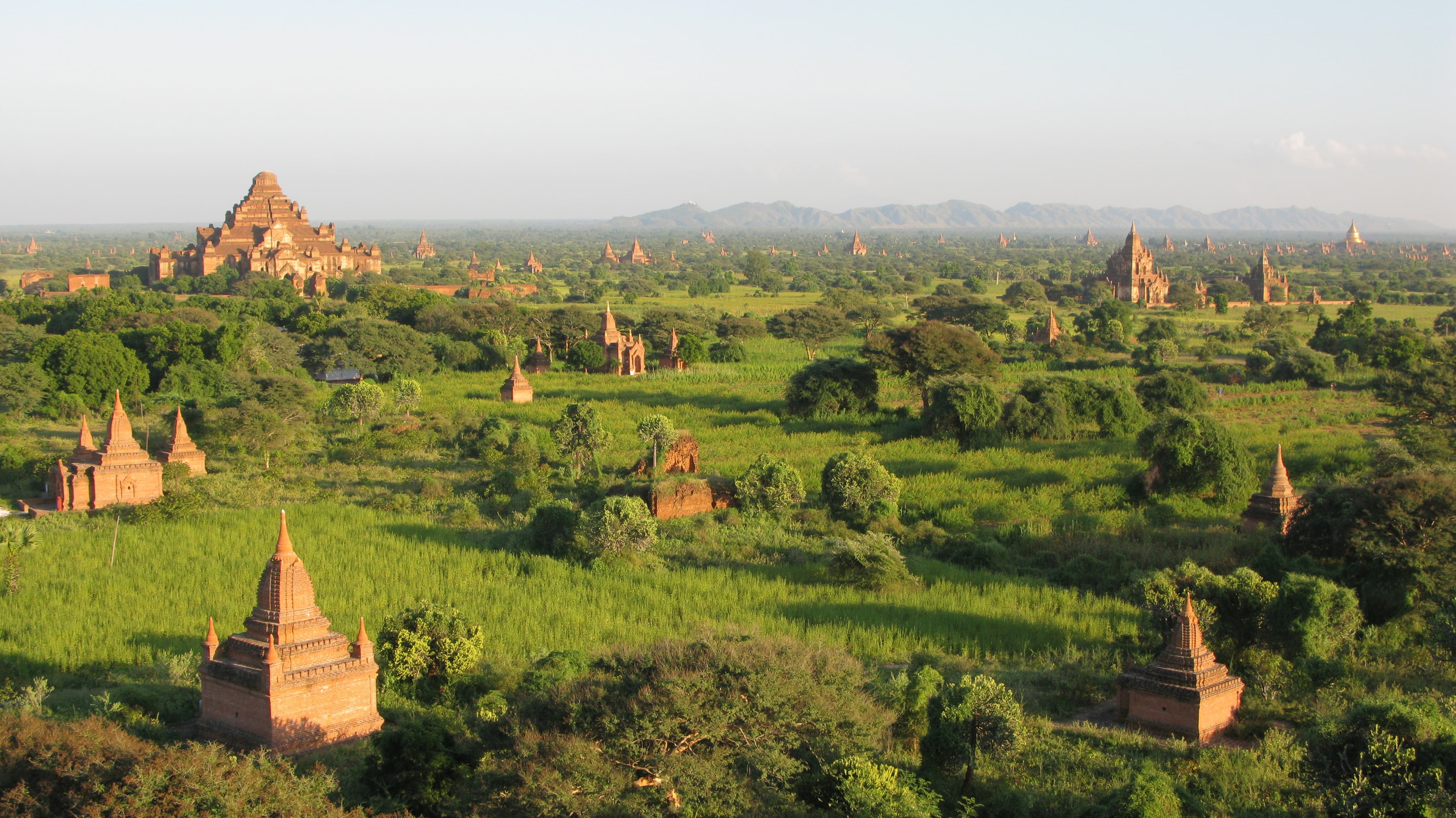
Bagan
A vast Buddhist plain of temples, stupas, monasteries, and pilgrimage memory that works as a sacred landscape rather than a single attraction.
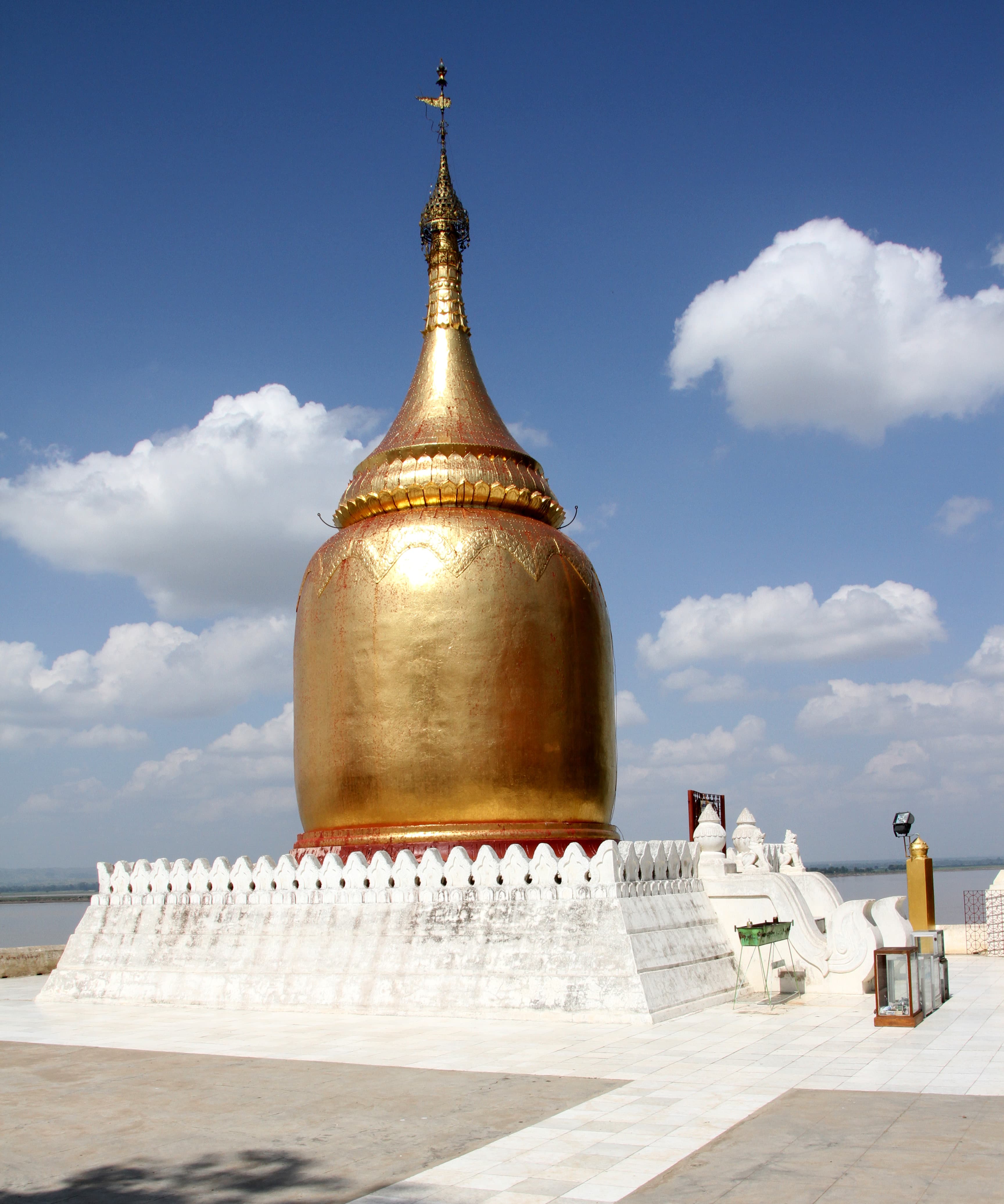
Bupaya Pagoda
A river-edge Bagan pagoda that keeps the stupa, pilgrimage, and waterfront dimensions of the sacred landscape visible together.
.jpg&w=3840&q=75)
Lawkananda Pagoda
A Bagan pagoda whose river-edge setting keeps the sacred plain connected to Buddhist pilgrimage and perimeter movement.
Regional journeys
Journeys in Southeast Asia
Keep exploring